
 By Abdullah Bajwa
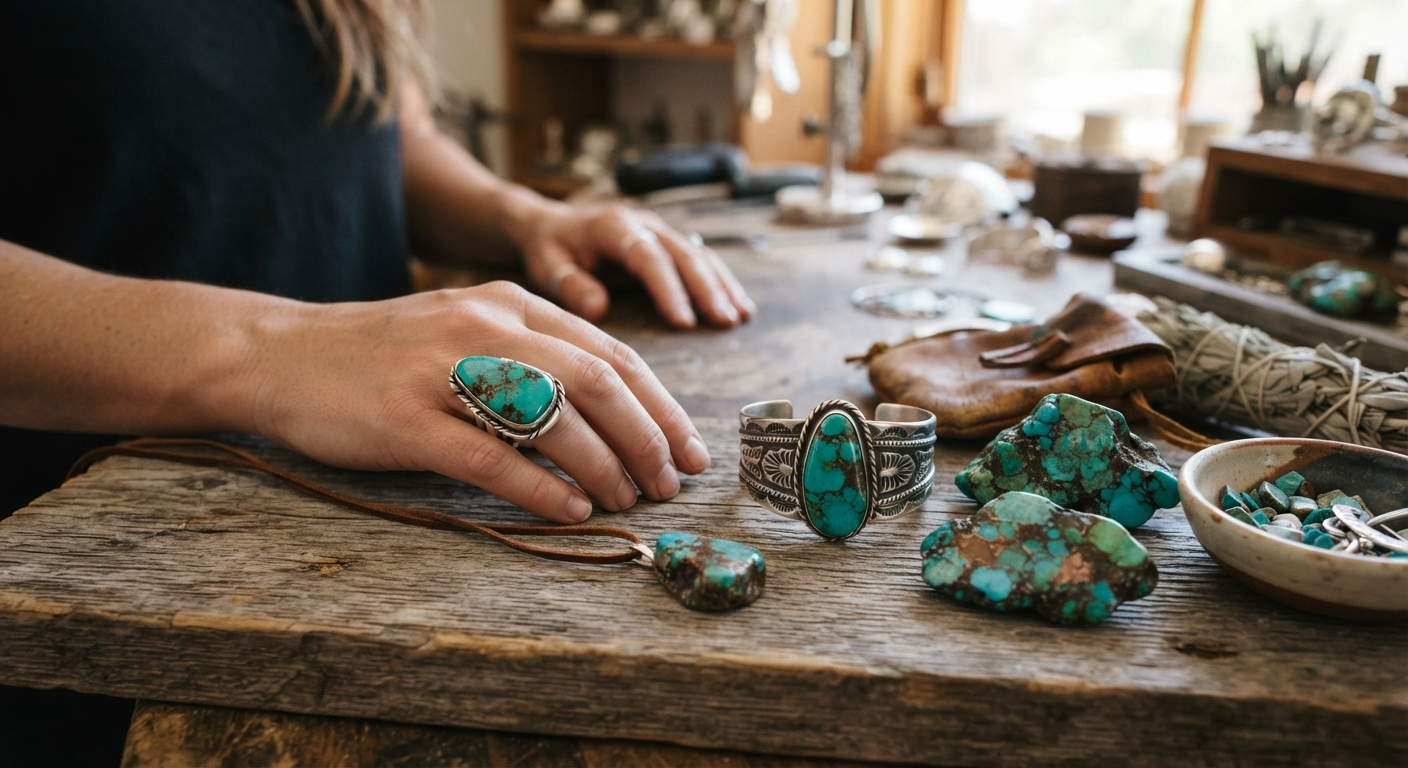
When exploring unique gemstones, it’s easy to come across stones that look a little different from traditional turquoise. Mojave turquois is one of those interesting materials. With its colorful appearance, metallic-looking veins, and Southwestern character, it has become an eye-catching choice for jewelry lovers who enjoy something outside the ordinary.
But what exactly is Mojave turquois? Is it a naturally occurring gemstone, or is it created through a special process? The answer is worth understanding before purchasing a piece.
Let’s take a closer look at its origins, appearance, uses, and value.
What Is Mojave Turquois?
Mojave turquois, also commonly spelled Mohave turquoise, is a distinctive turquoise-based composite material associated with the Kingman, Arizona, gemstone trade.
Unlike traditional natural turquoise, many commercial Mojave turquoise varieties are manufactured by combining smaller turquoise pieces with metallic matrix materials and resin. Depending on the product, the turquoise may also be dyed to achieve particular colors.
The result is a striking material that can feature blue, green, purple, or other vibrant shades with contrasting metallic patterns.
It’s particularly popular among jewelry designers who want an unusual gemstone appearance without relying entirely on large pieces of natural turquoise.
How Is Mojave Turquois Made?
The manufacturing process is what makes this material different from conventional turquoise.
Some varieties are produced using genuine Kingman turquoise fragments. These smaller pieces are assembled with a metallic matrix, pressed together, and stabilized with resin.
The process helps turn smaller pieces into usable material for jewelry production.
Typical characteristics include:
- Small turquoise fragments combined into a larger material.
- Metallic-looking bronze or copper-colored matrix.
- Resin stabilization for improved handling and durability.
- Additional color treatments in certain varieties.
- A finished appearance suitable for cutting and polishing.
It’s important to remember that manufacturing methods can vary. Not every stone marketed under the Mojave or Mohave name necessarily has the same composition.
Mojave Turquois Colors and Patterns
<escape>Mojave turquois</escape> is especially interesting because of its unusual color combinations. Traditional turquoise is usually associated with blue and green shades, but manufactured varieties offer a wider visual range.
Some commonly encountered colors include:
| Color | Appearance |
|---|---|
| Blue | Bright turquoise-blue with metallic veins |
| Green | Vibrant green shades with contrasting matrix |
| Purple | Purple tones with bronze-colored patterns |
| Teal | A mixture of blue and green |
| Mixed colors | Multiple shades combined in one stone |
The metallic-looking webbing is one of its most recognizable features. It creates an almost mosaic-like appearance, making each finished piece visually distinctive.
And that’s part of the attraction. Two cabochons may have similar colors but completely different patterns.
Mojave Turquois vs. Natural Turquoise
One of the most common questions buyers ask is whether Mojave turquois is genuine natural turquoise.
The distinction matters.
Natural turquoise forms through geological processes involving copper-rich groundwater and minerals containing phosphorus and aluminum. According to the Gemological Institute of America (GIA), it is a hydrated copper and aluminum phosphate mineral.
Commercial Mojave turquoise, on the other hand, is often an assembled material made using turquoise fragments and other components.
Here are the main differences:
| Feature | Natural Turquoise | Mojave Turquois |
|---|---|---|
| Formation | Natural geological process | Often manufactured composite |
| Composition | Turquoise mineral | Turquoise pieces and additional materials |
| Appearance | Natural matrix patterns | Often metallic-looking patterns |
| Colors | Mainly blue to green | Blue, green, purple, and mixed shades |
| Availability | Depends on mining sources | Depends on manufacturing and supply |
| Treatment | May be stabilized | Often assembled and stabilized |
Neither option automatically makes a better jewelry purchase. It depends on what the buyer wants and how the material is represented.
Popular Jewelry Uses of Mojave Turquois
Because of its unusual appearance, Mojave turquois works well in different jewelry styles.
Some popular applications include:
- Rings: Bold cabochons make attractive statement rings.
- Pendants: Larger stones allow the metallic patterns to stand out.
- Bracelets: The colorful material pairs nicely with silver settings.
- Earrings: Smaller pieces create interesting everyday accessories.
- Necklaces: Mixed-color designs offer a distinctive Southwestern look.
Sterling silver is a particularly appealing setting because its cool metallic finish complements the stone’s colorful surface.
Mojave Turquois Care and Maintenance
Although stabilized composite materials can be more practical than untreated turquoise, they still need proper care.
A few simple habits can help maintain their appearance:
- Clean jewelry using a soft, slightly damp cloth.
- Avoid harsh household cleaning chemicals.
- Keep pieces away from prolonged direct sunlight and excessive heat.
- Remove rings and bracelets before swimming or using cleaning products.
- Store jewelry separately to prevent scratches.
Avoid ultrasonic cleaners and aggressive polishing compounds unless the manufacturer specifically confirms they are safe for the particular material.
Is Mojave Turquois Worth Buying?
For someone who appreciates colorful Southwestern jewelry, Mojave turquois can be an appealing option.
Its unusual metallic patterns and vibrant shades offer something different from conventional blue turquoise. It can also make attractive statement jewelry without requiring a large natural turquoise specimen.
However, buyers should understand what they’re purchasing. Ask whether the material contains genuine turquoise, whether it has been dyed or stabilized, and whether it is an assembled composite.
A trustworthy seller should be comfortable explaining these details.
Final Thoughts on Mojave Turquois
Mojave turquois stands out because of its distinctive colors, metallic patterns, and creative use of turquoise material. It’s an interesting choice for people who enjoy expressive gemstone jewelry and contemporary Southwestern designs.
Whether you’re considering a ring, pendant, or bracelet, understanding its composition is just as important as appreciating its appearance. A little research before buying can make the experience much more rewarding.