
 By Abdullah Bajwa
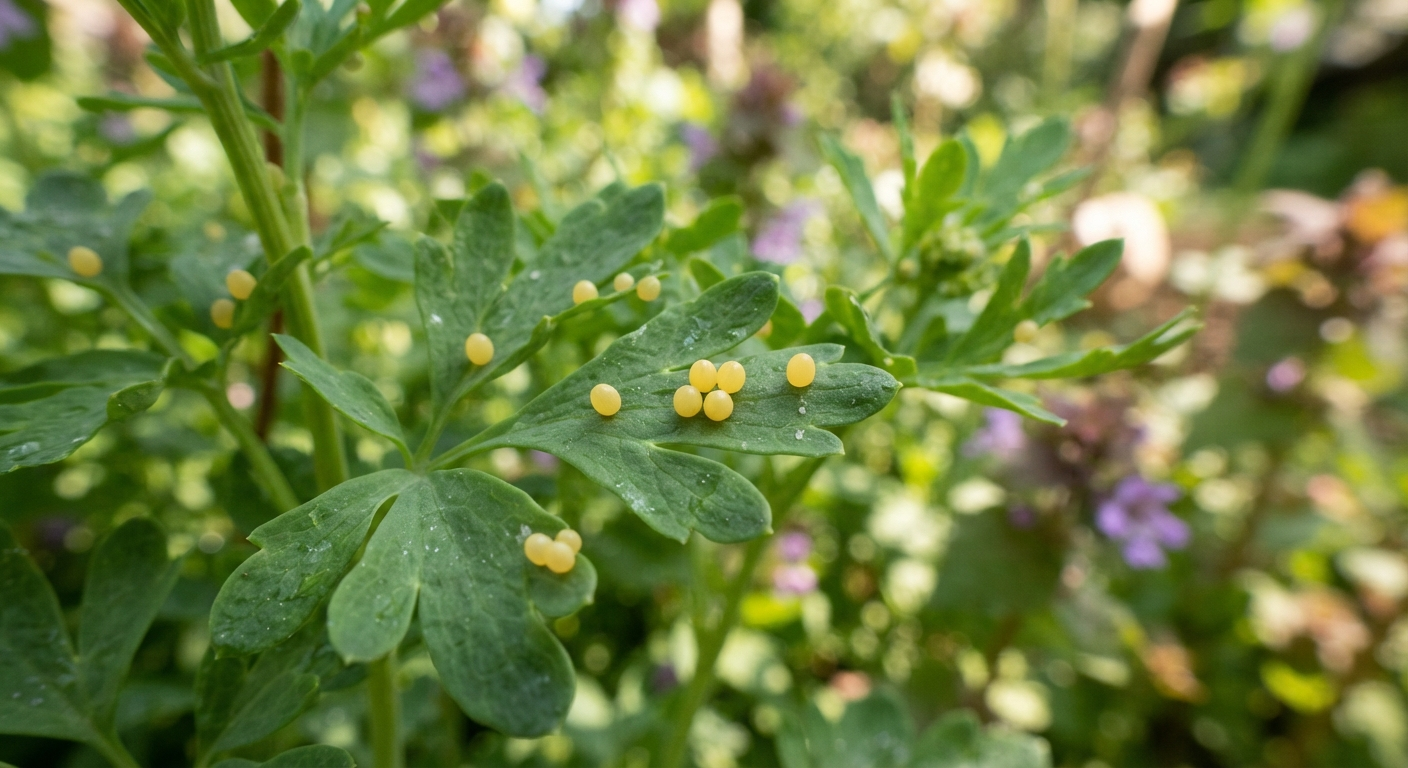
Swallowtails are among the most beautiful butterflies found in American gardens. Their colorful wings attract plenty of attention, but their life cycle begins with something much smaller — swallowtail eggs. These tiny eggs are easy to overlook, especially when they are attached to the leaves of familiar garden plants.
If you have noticed small yellow or cream-colored dots on your parsley, dill, citrus tree, or other plants, you might be looking at butterfly eggs. Understanding what they look like, where they appear, and how long they take to hatch can help you recognize and protect them.
Let’s take a closer look.
What Are Swallowtail Eggs?
Swallowtail eggs are the first stage in the life cycle of butterflies belonging to the Papilionidae family. Female butterflies lay them directly on suitable host plants, giving newly hatched caterpillars an immediate food source.
Most commonly, these eggs are round or slightly spherical. Their color depends on the swallowtail species and can range from pale yellow and cream to orange or brown.
For example, eastern black swallowtail eggs are generally pale yellow, while giant swallowtail eggs often have a cream-to-brown appearance with an orange-colored outer coating.
These eggs are surprisingly small, often measuring around 1–1.5 millimeters. You may need to look closely to spot them.
What Do Swallowtail Eggs Look Like?
Identifying swallowtail eggs becomes easier once you know what to look for. Although different species have slightly different appearances, several characteristics can help.
Common features include:
- Shape: Usually round or spherical.
- Size: Generally around 1–1.5 mm, depending on the species.
- Color: Pale yellow, cream, orange, or light brown.
- Texture: Often smooth, although some species have distinctive outer coatings.
- Location: Attached individually to leaves, stems, or other parts of host plants.
One interesting detail is that some eggs gradually change color as the caterpillar develops inside. Black swallowtail eggs, for instance, can become darker shortly before hatching.
Where Can You Find Swallowtail Eggs?
Finding swallowtail eggs usually starts with identifying the plants that female butterflies prefer.
Different swallowtail species depend on different host plants. Females generally select plants that their young caterpillars can eat after emerging.
Here are some common examples in the United States:
| Swallowtail species | Common host plants |
|---|---|
| Eastern black swallowtail | Parsley, dill, fennel, celery, carrot |
| Giant swallowtail | Citrus, prickly ash, common rue |
| Eastern tiger swallowtail | Wild cherry, willow, birch, ash |
| Spicebush swallowtail | Spicebush, sassafras, sweet bay |
| Pipevine swallowtail | Pipevine plants |
Check fresh foliage, particularly when butterflies are actively visiting your garden.
How Long Do Swallowtail Eggs Take to Hatch?
One of the most common questions among butterfly enthusiasts is how long they need to wait before seeing a caterpillar.
Generally, black swallowtail eggs hatch in approximately 3–9 days. Other species may have slightly different development periods depending on temperature, host plant, and environmental conditions.
During this period, a tiny caterpillar develops inside the protective eggshell.
When it is ready, the young caterpillar breaks through the shell. Interestingly, it often eats the remaining eggshell as its first meal.
Swallowtail Eggs and Their Development Stages
The complete transformation involves four major stages:
- Egg: The female lays eggs on a suitable host plant.
- Caterpillar: The newly hatched larva begins feeding and growing.
- Chrysalis: The mature caterpillar transforms inside a protective pupal case.
- Adult butterfly: A fully developed butterfly emerges and eventually begins the cycle again.
The timing varies by species and climate. Some swallowtails produce multiple generations each year, while others have fewer.
How to Care for Swallowtail Eggs
If you discover swallowtail eggs in your backyard, a little patience can make a difference.
You do not necessarily need special equipment or an elaborate butterfly enclosure. In many situations, leaving the eggs undisturbed on their original host plant is the simplest approach.
Here are a few helpful practices:
- Avoid unnecessary handling: These eggs are delicate, so touching or moving them can cause damage.
- Protect the host plant: Make sure the plant remains healthy and has enough foliage for the developing caterpillar.
- Avoid pesticides: Chemical insecticides can harm eggs, caterpillars, and adult butterflies.
- Watch for predators: Ants, spiders, and other insects may feed on butterfly eggs.
- Provide suitable shelter: Keep the plant in an environment with appropriate light and natural airflow.
If you are raising butterflies indoors, research the specific species first. Different swallowtails have different feeding and environmental requirements.
Why Are Swallowtail Eggs Important?
Swallowtail eggs are important because they represent the beginning of another butterfly generation. Without suitable host plants and safe places to lay eggs, these butterflies would struggle to maintain healthy populations.
Home gardens can play a surprisingly useful role. Growing parsley, dill, fennel, citrus, native shrubs, and other host plants can provide valuable habitat for different species.
And there is something special about watching a tiny egg turn into a colorful butterfly. It is a small natural event, but one that makes gardening more interesting.
Frequently Asked Questions About Swallowtail Eggs
Are swallowtail eggs laid individually?
Most swallowtail species lay their eggs individually on suitable host plants. However, some species, including certain pipevine swallowtails, can lay eggs in small groups.
What color are swallowtail eggs?
They may be yellow, cream, orange, brown, or greenish, depending on the species and development stage.
Can swallowtail eggs survive winter?
Some swallowtail species overwinter in the chrysalis stage rather than the egg stage. Their seasonal development varies according to species and climate.
Should I remove swallowtail eggs from my plants?
Usually, no. If you want to support butterflies, leave the eggs on their natural host plants whenever possible.
Final Thoughts
Swallowtail eggs may be tiny, but they are an important part of the butterfly life cycle. Learning to recognize them can help gardeners appreciate the wildlife living among their plants.
Whether you discover them on parsley, dill, citrus leaves, or native trees, give them time and avoid disturbing their natural development. With the right host plants and a little patience, you may soon see a hungry caterpillar where a tiny egg once rested.