
 By Abdullah Bajwa
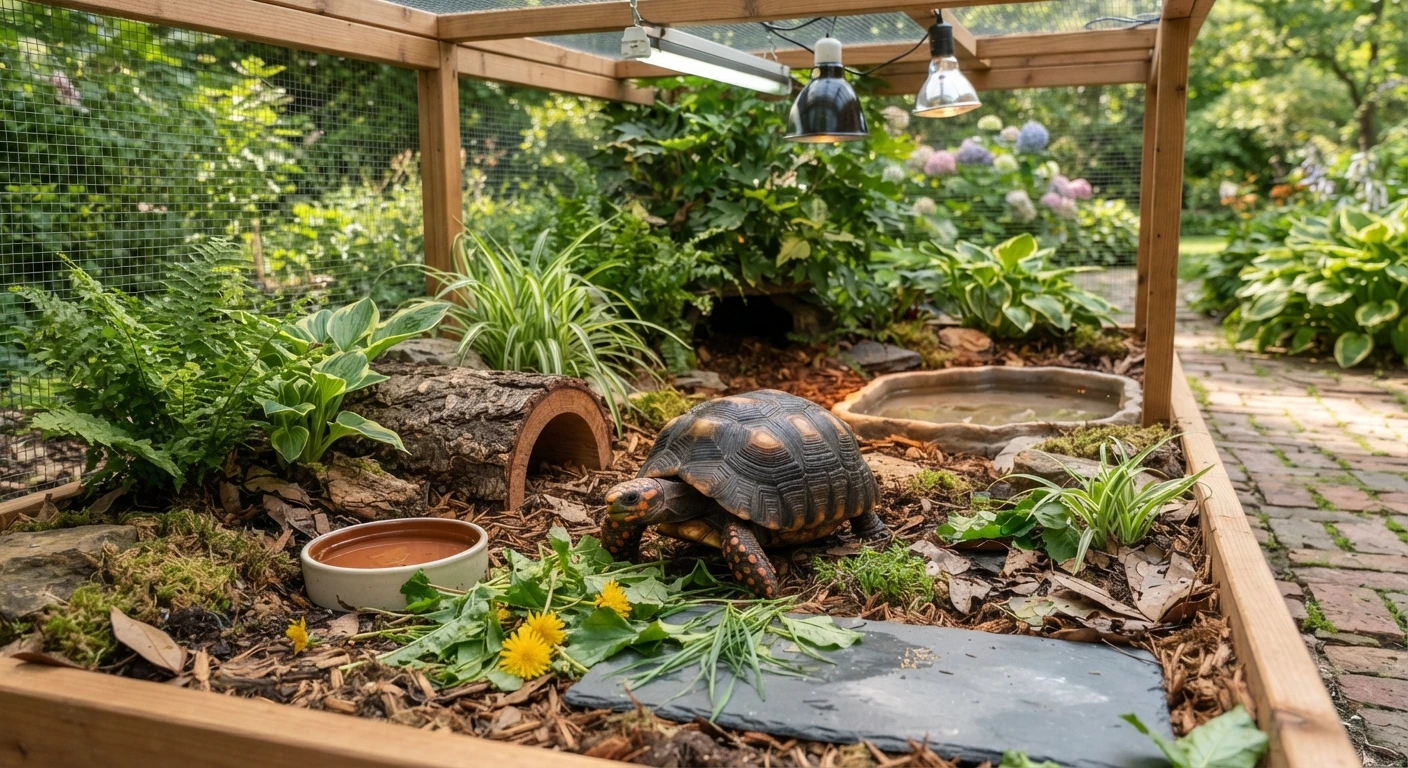
Creating a comfortable home for a pet tortoise involves more than simply buying a tank and adding some bedding. Red-footed tortoises come from warm, humid regions of South America, where they spend much of their time exploring forest floors, hiding beneath plants, and searching for food.
That’s why red foot tortoise housing needs a little extra attention. These animals have specific environmental requirements, particularly when it comes to temperature, humidity, lighting, and available space.
Whether you’re preparing for a young tortoise or already have an adult, the right enclosure can make everyday care much easier.
Why Red Foot Tortoise Housing Matters
Red-footed tortoises are tropical reptiles. Unlike some desert tortoise species, they prefer environments with plenty of moisture and areas where they can escape direct light.
An unsuitable enclosure can contribute to dehydration, poor shell development, respiratory problems, and other health concerns.
A good habitat should provide:
- Enough floor space for comfortable movement.
- Warm and cool areas for temperature regulation.
- Consistently appropriate humidity.
- Safe hiding places and natural enrichment.
- Access to clean drinking and soaking water.
- Suitable UVB lighting when kept indoors.
And remember, these tortoises can grow considerably larger than they appear as hatchlings. Planning for their adult size is always a smart move.
Choosing the Right Red Foot Tortoise Housing
The enclosure should be spacious, secure, and easy to maintain. Indoor habitats are useful in places where outdoor temperatures aren’t suitable throughout the year.
Large custom-built wooden or PVC enclosures can work particularly well. A standard glass aquarium may be suitable for a very small juvenile temporarily, but it usually becomes restrictive as the animal grows.
For an adult, an enclosure around 8 × 4 feet is a commonly recommended starting point for indoor housing, although larger is better when space allows.
Outdoor enclosures are another excellent option in suitable climates. They should have secure boundaries, shaded areas, protection from predators, and access to shelter.
Red Foot Tortoise Housing Temperature and Humidity
Temperature and humidity are two of the most important parts of successful tortoise care.
These reptiles cannot regulate their body temperature internally like humans. They need access to different temperature zones so they can warm up or move somewhere cooler whenever necessary.
Here is a general indoor temperature guide:
| Enclosure area | Recommended temperature |
|---|---|
| Basking area | 90–95°F (32–35°C) |
| Cool area | 75–85°F (24–29°C) |
| Nighttime | 68–75°F (20–23°C) |
| Humidity | Approximately 70–90% |
Humidity should be monitored with a reliable digital hygrometer. Regular misting and moisture-retaining substrate can help maintain suitable conditions.
But don’t confuse humidity with poor ventilation. Fresh air circulation is still important, and constantly wet, stagnant conditions can encourage mold and bacterial growth.
Best Substrate for Red Foot Tortoise Housing
Substrate is the material covering the enclosure floor. It affects comfort, moisture retention, and the tortoise’s ability to display natural behaviors.
Red-footed tortoises benefit from naturalistic substrates that hold moisture without becoming waterlogged.
Some suitable options include:
- Organic, pesticide-free topsoil.
- Coconut coir.
- Sphagnum moss in designated humid areas.
- Clean leaf litter.
- Suitable soil and coconut fiber mixtures.
A reasonably deep substrate layer allows tortoises to dig and settle comfortably.
Avoid cedar and pine shavings, sharp materials, and loose substrates that create unnecessary ingestion risks. Food can also be offered on a clean feeding surface to reduce accidental substrate consumption.
Red Foot Tortoise Housing: Lighting and Hiding Areas
Indoor tortoises need appropriate lighting, including UVB exposure. UVB helps the body produce vitamin D3, which supports calcium absorption and healthy bone development.
A suitable UVB fixture should be installed according to the manufacturer’s distance and coverage recommendations. Glass and plastic block UVB rays, so placing an enclosure beside a sunny window isn’t an adequate replacement.
Hiding areas are equally important. Red-footed tortoises naturally seek shelter, particularly when resting.
Consider adding:
- A hide box on the cooler side.
- A humid hide containing damp sphagnum moss or leaf litter.
- Non-toxic plants for natural cover.
- Smooth logs or other safe climbing and exploration features.
These additions make the habitat more interesting while giving the tortoise somewhere to retreat when it wants privacy.
Essential Equipment for Red Foot Tortoise Housing
You don’t need an extremely complicated setup, but several basic items are worth having from the beginning.
| Equipment | Purpose |
|---|---|
| Digital thermometer | Monitors enclosure temperatures |
| Hygrometer | Measures humidity |
| UVB lighting | Supports calcium metabolism |
| Heat lamp | Creates a warm basking area |
| Thermostat | Helps regulate suitable heating equipment |
| Shallow water dish | Provides drinking and soaking water |
| Hide boxes | Offers security and shelter |
| Natural substrate | Supports digging and moisture retention |
Clean water should always be available. Choose a shallow dish that the tortoise can enter and leave easily without struggling.
Keeping Red Foot Tortoise Housing Clean
Even a beautifully designed enclosure needs regular maintenance. Food leftovers, droppings, and dirty water can quickly make the environment unhealthy.
A simple routine helps:
- Remove waste and uneaten food daily.
- Replace drinking and soaking water regularly.
- Check humidity and temperature every day.
- Remove moldy or heavily soiled substrate.
- Clean and disinfect the enclosure periodically using reptile-safe products.
It’s also useful to inspect the tortoise regularly for changes in appetite, activity, shell condition, or breathing.
Final Thoughts on Red Foot Tortoise Housing
Good red foot tortoise housing is about creating an environment that supports the animal’s natural needs rather than simply providing somewhere to sleep.
Give your tortoise enough room, maintain suitable warmth and humidity, provide UVB lighting, and include natural hiding spaces. Small details really do matter.
And don’t be afraid to adjust the setup as your tortoise grows. A habitat that works for a hatchling might not be appropriate for a full-grown adult.
With consistent maintenance and proper environmental conditions, you can create a comfortable habitat that supports your tortoise’s health for many years.