 By Abdullah Bajwa
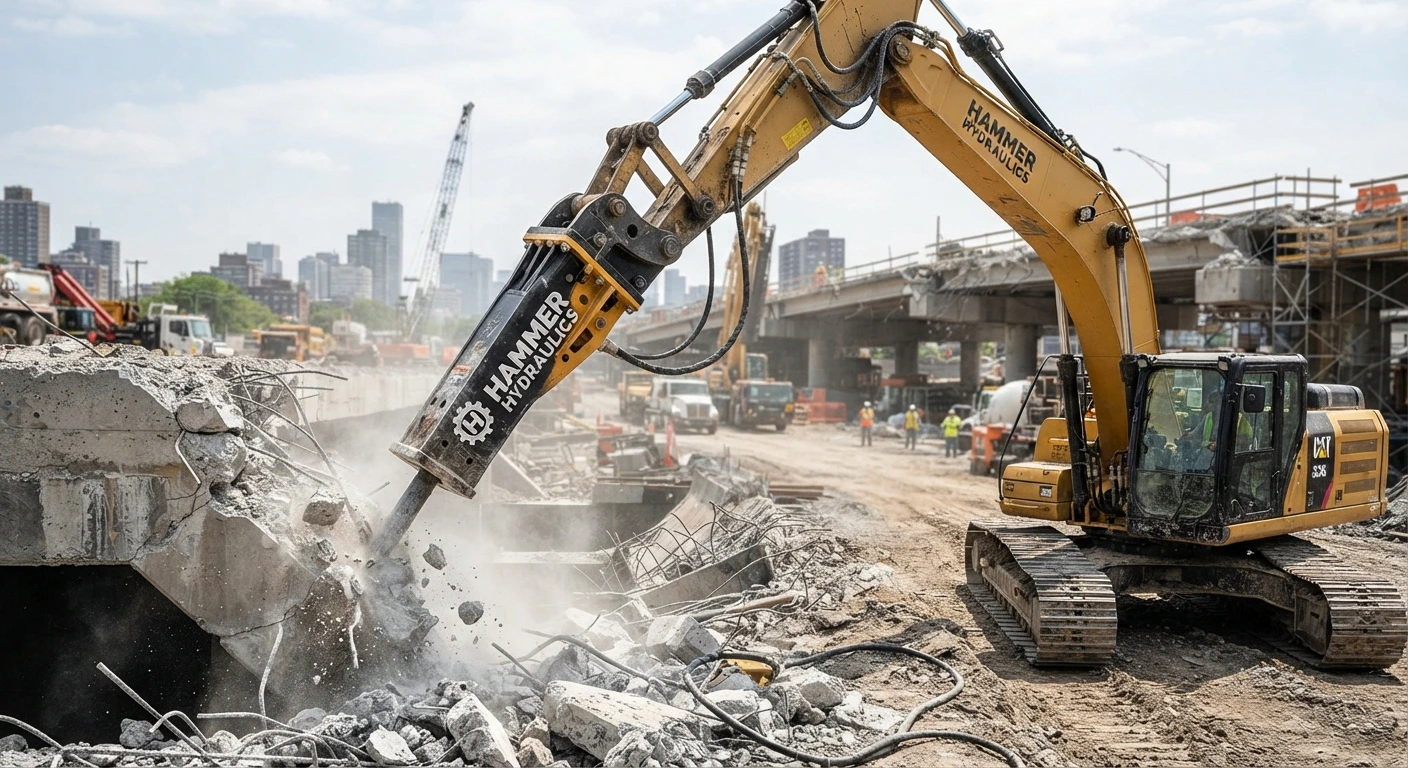
Heavy construction work often involves breaking materials that ordinary machinery simply cannot handle. Rock, reinforced concrete, asphalt, and other hard surfaces require equipment that delivers considerable force without relying entirely on manual labor. This is where hammer hydraulics becomes important.
Hammer hydraulics refers to the hydraulic technology used to operate powerful hammering equipment, particularly excavator-mounted hydraulic breakers. These machines use pressurized oil to produce repeated mechanical impacts. The result? Faster demolition, better productivity, and less physical effort on demanding job sites.
But how does the system actually work, and what should operators know before using one?
What Is Hammer Hydraulics?
Hammer hydraulics is based on converting hydraulic energy into mechanical impact force. A hydraulic hammer, sometimes called a hydraulic breaker or rock breaker, is commonly attached to an excavator, backhoe loader, or another compatible carrier machine.
Instead of depending on a separate engine, the attachment generally uses the carrier’s hydraulic pump to operate its internal mechanism.
These systems are widely used for:
- Breaking large rocks during excavation.
- Removing old concrete structures.
- Demolishing roads and pavements.
- Preparing construction foundations.
- Working in quarries and mining areas.
- Clearing hard surfaces during underground construction.
And it’s not just about delivering force. Proper hydraulic control also helps operators achieve consistent performance.
How Hammer Hydraulics Works
The operating principle is relatively straightforward, although the internal engineering can be quite sophisticated.
The carrier machine supplies pressurized hydraulic oil through dedicated hoses. Inside the hammer, a control valve directs this oil to move a heavy piston. The piston accelerates and strikes a hardened steel working tool, transferring impact energy into the material.
The process repeats rapidly.
Here’s a simplified breakdown:
- Hydraulic supply: The excavator pump delivers pressurized oil to the attachment.
- Valve operation: Internal valves control the movement and direction of hydraulic oil.
- Piston movement: Hydraulic pressure drives the piston through its operating cycle.
- Impact generation: The piston strikes the working tool, creating powerful mechanical force.
- Return cycle: The hydraulic circuit resets the piston for another impact.
Some models also use nitrogen gas chambers or accumulators to store and release energy during operation. The exact arrangement depends on the manufacturer’s design.
Main Components of Hammer Hydraulics
A hydraulic hammer contains several parts that must work together. Damage or poor performance in one component can affect the entire attachment.
| Component | Main Function |
|---|---|
| Hydraulic piston | Produces the hammering movement |
| Control valve | Directs hydraulic oil |
| Cylinder | Houses and guides internal components |
| Accumulator | Stores or stabilizes energy, depending on design |
| Working tool | Transfers impact force to the material |
| Hydraulic hoses | Carry oil between the carrier and attachment |
| Bushings and seals | Guide moving parts and prevent leakage |
Regular inspection of these components helps prevent unnecessary downtime.
Advantages of Hammer Hydraulics
Why do contractors choose hydraulic breakers instead of relying entirely on conventional demolition methods?
There are several reasons.
1. Strong breaking performance
Hydraulic hammers deliver repeated impacts capable of breaking dense materials, including concrete and hard rock.
2. Improved productivity
An excavator-mounted hammer can handle substantial demolition work without requiring workers to perform every task manually.
3. Versatility
Different hammer sizes and working tools allow operators to handle different materials and project requirements.
4. Better equipment integration
Because the attachment uses the carrier’s hydraulic system, it can be operated through the machine’s existing controls when properly configured.
5. Reduced manual effort
Heavy breaking operations become easier to manage, although trained operators and appropriate safety measures remain essential.
Choosing the Right Hammer Hydraulics Equipment
Not every hydraulic hammer is suitable for every excavator. Choosing an attachment based only on its physical size or advertised impact power can create problems later.
Before purchasing, consider these important factors:
- Carrier weight: The hammer must match the excavator’s approved operating weight range.
- Oil flow: Check the required hydraulic flow rate in litres per minute.
- Operating pressure: Make sure the machine can provide the specified pressure.
- Impact energy: Consider the strength and thickness of the material being broken.
- Working frequency: Compare the hammer’s blows per minute with the requirements of the project.
- Attachment compatibility: Confirm mounting dimensions, hydraulic connections, and auxiliary circuit requirements.
A properly matched system generally performs more efficiently and experiences less unnecessary wear.
Hammer Hydraulics Maintenance Tips
Even high-quality equipment needs regular attention. Hydraulic hammers operate under repeated impact loads, so ignoring small maintenance issues can eventually lead to expensive repairs.
Some useful maintenance practices include:
- Inspect hydraulic hoses and connections for leakage.
- Use the hydraulic oil grade recommended by the equipment manufacturer.
- Grease the working tool and bushings according to the specified schedule.
- Check tool retainers, pins, and mounting bolts.
- Monitor hydraulic oil temperature.
- Inspect the piston, seals, and accumulator when servicing is required.
- Avoid operating the hammer without proper contact with the material.
But there’s another important point: operators should never exceed the manufacturer’s recommended hydraulic flow or pressure settings. Incorrect adjustments can damage both the attachment and the carrier machine.
Common Applications of Hammer Hydraulics
Hammer hydraulics has become an important part of several industries.
| Industry | Typical Application |
|---|---|
| Construction | Breaking concrete and foundations |
| Mining | Fragmenting hard rock |
| Roadwork | Removing damaged asphalt and pavement |
| Demolition | Dismantling concrete structures |
| Quarrying | Breaking large stone formations |
| Infrastructure | Excavation and site preparation |
The equipment’s size and impact characteristics vary depending on the working environment.
Final Thoughts
Hammer hydraulics plays an important role in modern construction, excavation, and demolition. By converting hydraulic pressure into repeated mechanical impacts, these systems make difficult breaking operations more manageable and productive.
However, good performance isn’t simply about choosing the most powerful hammer. Equipment compatibility, correct hydraulic settings, regular lubrication, and proper operator training all matter.
When these factors are handled correctly, a hydraulic hammer can become a dependable piece of equipment for demanding jobs — and a valuable long-term investment for contractors.