 By Abdullah Bajwa
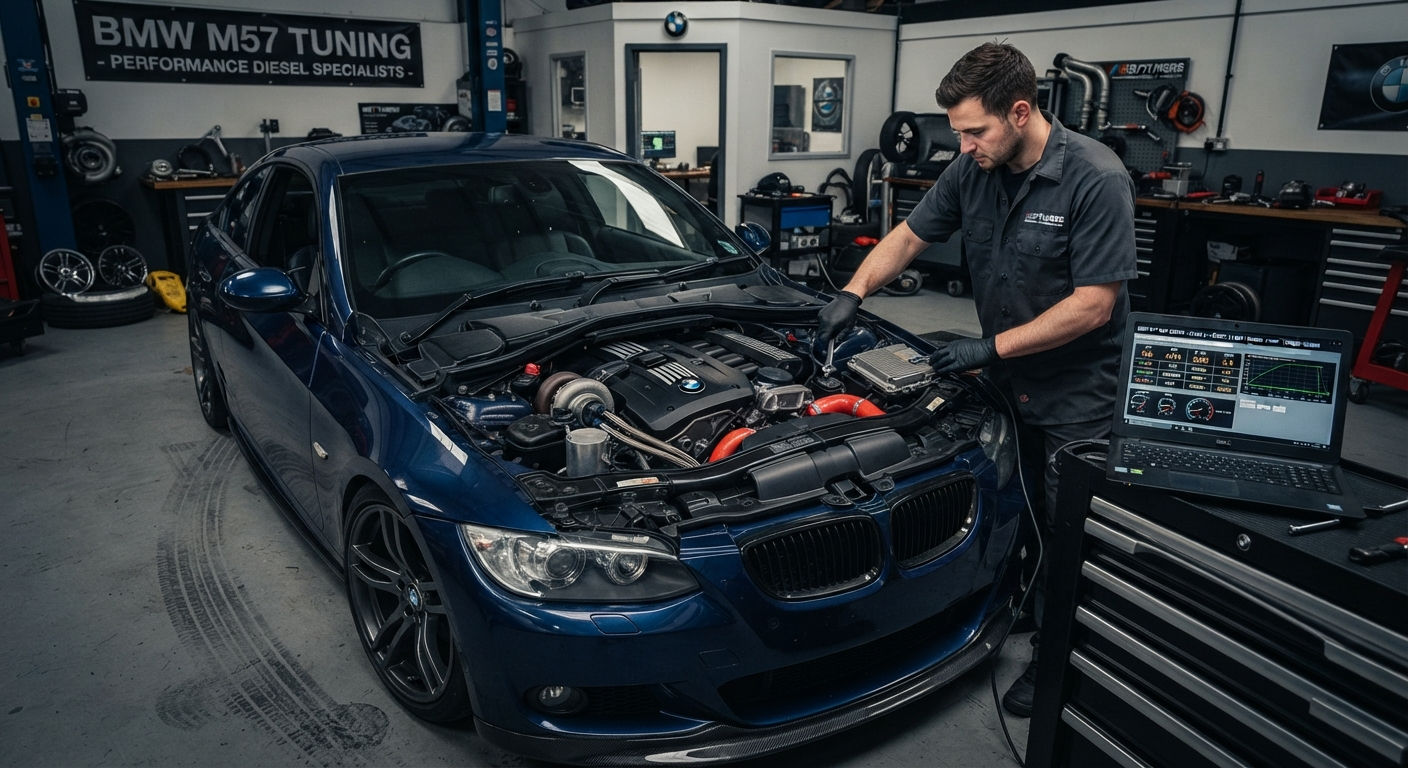
The BMW M57 is one of those diesel engines that has earned a serious reputation among car enthusiasts. Known for its strong torque, smooth six-cylinder performance, and impressive durability, it has become a popular platform for performance modifications. Whether fitted in a BMW 330d, 530d, 535d, or X5, this engine offers plenty of room for improvement.
But what makes it so interesting for tuning projects? It’s not just about producing more horsepower. The M57 responds well to carefully selected upgrades, allowing owners to improve acceleration, throttle response, and overall driving performance without necessarily rebuilding the entire engine.
Let’s explore what makes bmw m57 tuning so popular and which modifications are worth considering.
What Makes the BMW M57 Engine Special?
BMW introduced the M57 family in 1998. It’s a turbocharged, common-rail diesel engine featuring an inline-six configuration. Different generations and versions were produced over the years, with varying turbochargers, injection systems, and factory power outputs.
One reason enthusiasts appreciate this engine is its strong construction. The cast-iron engine block, efficient turbocharging system, and impressive low-end torque provide a solid foundation for performance upgrades.
Some popular BMW models equipped with M57 engines include:
- BMW E46 330d
- BMW E39 and E60 530d
- BMW E60 535d
- BMW E53 and E70 X5 3.0d
- BMW E83 X3 3.0d
- BMW E65 730d
Not every M57 is identical, though. Identifying the exact engine generation is important before choosing modifications.
BMW M57 Tuning: Understanding the Different Stages
When discussing bmw m57 tuning, you’ll often hear people mention Stage 1, Stage 2, and Stage 3. These labels describe general modification levels rather than universal technical standards.
BMW M57 Tuning Stage 1
Stage 1 is generally the easiest starting point. It involves modifying the engine control unit (ECU) to optimize boost pressure, fuel delivery, torque management, and other operating parameters.
A professional remap can provide:
- Increased horsepower and torque
- Better acceleration
- Improved throttle response
- Stronger mid-range performance
- More enjoyable overtaking ability
For many owners, this is enough to make the vehicle feel noticeably different without replacing major engine components.
BMW M57 Tuning Stage 2
Stage 2 usually involves additional hardware upgrades alongside a custom ECU calibration.
Common modifications include:
- Larger intercooler
- Upgraded turbocharger
- Improved intake and charge-air plumbing
- Suitable exhaust upgrades
- Clutch or transmission improvements where necessary
The exact requirements depend on the engine version and power target.
BMW M57 Tuning Stage 3
Stage 3 is aimed at enthusiasts looking for substantially higher performance. It can involve hybrid or larger turbochargers, upgraded injectors, fuel-system improvements, stronger engine components, and extensive custom calibration.
At this level, the project becomes more expensive and requires careful engineering.
BMW M57 Tuning: Expected Horsepower Gains
Power figures vary considerably depending on the original engine, turbocharger, fuel system, and vehicle condition.
The following figures are examples published by specialist M57 tuners, not guaranteed results for every vehicle.
| Engine version | Example tuned output |
|---|---|
| M57 184/193 hp | 220–225 hp (Stage 1) |
| M57N 204/218 hp | 250–260 hp (Stage 1) |
| M57N2 231/235 hp | Around 270 hp (Stage 1) |
| M57N2 286 hp | Around 340 hp (Stage 1) |
Source: House of Torque’s M57 tuning recommendations.
These differences explain why identifying your engine code matters. A 184 hp early M57 and a later 286 hp version shouldn’t be expected to produce identical results from the same modifications.
BMW M57 Tuning: Important Upgrades to Consider
Before chasing bigger numbers, it’s worth understanding which components actually support better performance.
1. Turbocharger upgrade
The turbocharger plays a major role in determining how much air the engine can deliver. Larger or hybrid turbochargers can support higher power targets, although turbo lag and supporting modifications must be considered.
2. Intercooler improvement
A larger intercooler helps reduce intake-air temperatures, particularly during repeated acceleration or demanding driving conditions.
3. Fuel injectors
Upgraded injectors or suitable injector nozzles can provide additional fueling capacity when the turbocharger and engine management system are configured to support them.
4. ECU remapping
A properly developed ECU calibration brings all the modifications together. It should include sensible boost, fueling, temperature, and torque limits.
5. Transmission improvements
Extra diesel torque can put significant stress on clutches, automatic transmissions, and drivetrain components. These should never be overlooked.
BMW M57 Tuning: Reliability and Maintenance
More power is exciting, but reliability should remain a priority.
Before tuning, have these components inspected:
- Turbocharger condition and oil supply
- Injector performance and correction values
- Cooling system and radiator
- Intake manifold and swirl flaps
- Vacuum hoses and boost leaks
- Crankshaft pulley
- Clutch or automatic transmission condition
And don’t ignore regular oil changes. A healthy engine is a much better starting point than an already tired one.
It’s also important to remember that removing emissions equipment such as DPF or EGR systems may violate local road regulations and increase pollution. Check applicable laws before making changes.
Is BMW M57 Tuning Worth It?
For many enthusiasts, absolutely. The M57 combines a strong diesel platform with impressive tuning potential. Even a conservative remap can make a noticeable difference in everyday driving.
The smartest approach is to identify your exact engine version, establish a realistic horsepower target, inspect the mechanical condition, and work with an experienced BMW diesel tuner.
Ultimately, bmw m57 tuning isn’t simply about achieving the biggest dyno number. It’s about building a responsive, enjoyable, and dependable BMW that delivers the performance you’re looking for without sacrificing its long-term usability.