 By Abdullah Bajwa
If you’ve checked your monthly mortgage statement and noticed a charge called “hazard insurance,” you might be wondering what it actually means. Is it another fee from your lender? Do you really need to pay it? And why is it included in your mortgage payment?
These are common questions, especially for first-time homeowners.
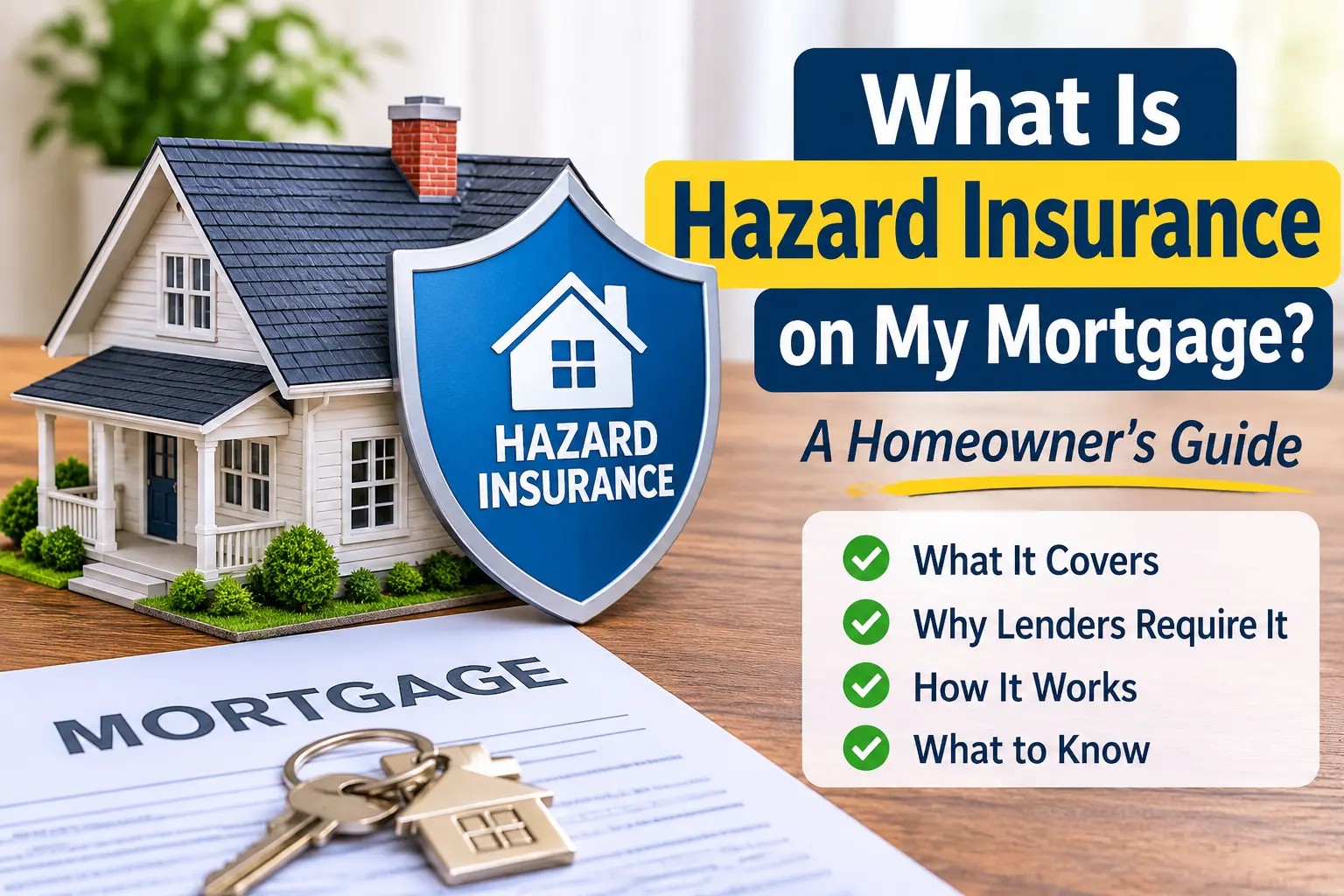
Hazard insurance on your mortgage is coverage that helps protect the physical structure of your home against certain unexpected events, such as fires, windstorms, hail, and other covered disasters. Most mortgage lenders require homeowners to maintain this protection because the property also serves as security for the loan.
Let’s break down how it works and what it means for your monthly payments.
What Is Hazard Insurance on My Mortgage?
Hazard insurance is generally the part of a homeowners insurance policy that covers damage to the actual structure of your house. It may help pay for repairs or rebuilding if a covered event causes significant damage.
For example, imagine a fire damages your kitchen, walls, and part of your roof. If your insurance policy covers that type of incident, hazard insurance can help pay for the necessary repairs, subject to your policy limits and deductible.
Mortgage lenders usually require this coverage because they have a financial interest in the property until the mortgage is fully paid.
It’s worth understanding that hazard insurance is not necessarily a separate policy. In many cases, it’s included within a standard homeowners insurance policy.
Why Does My Mortgage Lender Require Hazard Insurance?
Your lender wants to make sure the property doesn’t lose its value because of an uninsured disaster.
Think about it this way: If a home worth $250,000 suffers severe fire damage, the homeowner still has mortgage payments to make. Meanwhile, the lender could face a significant financial loss if the property isn’t insured.
That’s why mortgage agreements generally require borrowers to maintain adequate property insurance.
Here are a few reasons lenders require it:
- Protects the property: Helps cover damage caused by insured hazards.
- Reduces financial risk: Protects the lender’s investment in the home.
- Maintains loan requirements: Keeps the homeowner compliant with mortgage agreement terms.
- Supports rebuilding: Provides financial assistance after covered property damage.
But remember, the policy also benefits you as a homeowner. Without adequate insurance, repairing major damage could become extremely expensive.
What Does Hazard Insurance Typically Cover?
Coverage depends on the specific insurance policy, location, and selected protection limits.
Common covered events may include:
- Fire and smoke damage.
- Lightning strikes.
- Windstorms and hail.
- Certain explosions.
- Vandalism and malicious damage.
- Damage caused by certain falling objects.
However, not every natural disaster is automatically covered.
For example, standard homeowners insurance generally doesn’t cover flood or earthquake damage. Separate coverage may be necessary.
Hazard Insurance vs. Homeowners Insurance vs. Mortgage Insurance
These terms can sound confusing, particularly when reviewing mortgage documents. However, they serve different purposes.
| Insurance Type | What It Protects | Main Purpose |
|---|---|---|
| Hazard Insurance | Physical structure of the home | Covers certain property damage |
| Homeowners Insurance | Home, belongings, and personal liability (depending on policy) | Provides broader property protection |
| Mortgage Insurance | Lender against certain losses if the borrower defaults | Protects the lender from loan-related risk |
One important distinction: Hazard insurance protects against covered damage to your property, while mortgage insurance is generally associated with the financial risk of a borrower failing to repay a loan.
They aren’t interchangeable.
How Is Hazard Insurance Included in My Monthly Mortgage Payment?
You may notice that your monthly mortgage payment includes more than just the principal and interest.
Many lenders use an escrow account to collect money for property taxes and homeowners insurance.
Here’s how the process usually works:
- Your lender estimates your annual homeowners insurance premium.
- A portion of that amount is added to your monthly mortgage payment.
- The money goes into your escrow account.
- When the insurance bill becomes due, your mortgage servicer pays the insurance company.
For example, if your annual hazard insurance premium is $1,200, your lender may collect approximately $100 per month toward that expense.
This amount is separate from your principal and interest, even though it appears in the same monthly payment.
Also, your monthly escrow contribution can change if your insurance premium increases.
What Happens If You Don’t Have Hazard Insurance?
Failing to maintain the required coverage can create problems with your mortgage agreement.
If your policy expires, gets canceled, or doesn’t meet your lender’s requirements, the mortgage servicer may purchase insurance on your behalf. This is commonly called force-placed or lender-placed insurance.
There are a few things homeowners should understand:
- Force-placed insurance can be considerably more expensive.
- It may provide less coverage than a policy purchased independently.
- The cost may be added to your mortgage balance or otherwise charged to you.
- It primarily protects the lender’s financial interest rather than providing the same protection as a regular homeowners policy.
If you receive a notice about missing insurance, contact your mortgage servicer and insurance provider promptly.
How Can You Check Your Hazard Insurance Cost?
If you’re unsure how much you’re paying, start by reviewing your monthly mortgage statement and escrow account details.
You can also:
- Check your homeowners insurance declarations page.
- Review the insurance section of your Loan Estimate.
- Contact your mortgage servicer for an escrow breakdown.
- Compare insurance quotes from different providers.
- Ask whether your current coverage meets your lender’s requirements.
A little checking can sometimes prevent unnecessary expenses.
Final Thoughts
So, what is hazard insurance on my mortgage? Simply put, it’s protection for the physical structure of your home against certain covered risks. Mortgage lenders generally require it to protect the property securing their loan, while homeowners benefit from having financial support when unexpected damage occurs.
If you see this charge on your mortgage statement, don’t automatically assume it’s an extra lender fee. It may simply be your regular homeowners insurance premium collected through escrow.
Take a few minutes to review your policy, understand what’s covered, and make sure your insurance stays active. It’s a small but important part of protecting your home and your financial investment.