
 By Abdullah Bajwa
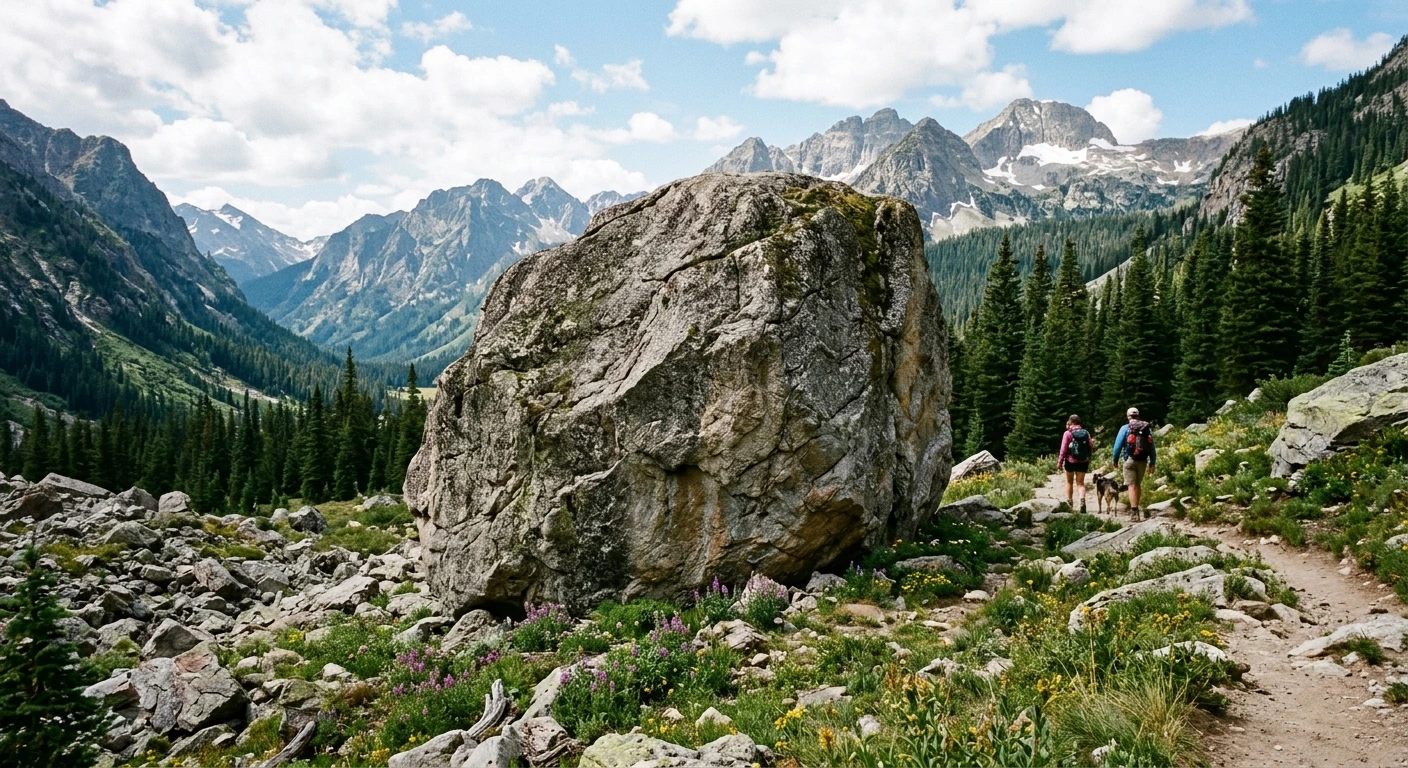
A large boulder is more than just a massive piece of rock sitting in a field, garden, or mountain landscape. These natural formations have interesting geological histories, practical uses, and even decorative value. Some are found along rivers, others rest on mountain slopes, and a few are so enormous that they have become famous landmarks.
You might have noticed a large boulder in a garden, beside a hiking trail, or near a construction site. But have you ever wondered how it got there, what it’s made of, or why people use these rocks in landscaping?
Let’s explore what makes these impressive natural objects so interesting.
What Is a Large Boulder?
A boulder is a naturally occurring rock fragment that is significantly larger than a cobble. According to the U.S. National Park Service geological glossary, a boulder has a diameter greater than 256 millimeters (approximately 10 inches).
However, a large boulder can be several feet wide and weigh hundreds or even thousands of pounds. Its actual size depends on its geological environment and how it was formed.
Unlike manufactured concrete blocks, natural boulders have irregular shapes, unique surfaces, and different mineral patterns. No two look exactly alike.
Common characteristics include:
- Irregular or rounded shapes.
- Rough, smooth, or weathered surfaces.
- Different colors depending on mineral composition.
- Considerable weight and density.
- Natural cracks, patterns, and textures.
And here’s something interesting: a boulder doesn’t have to be perfectly round. Some have sharp edges, while others look almost polished.
How Does a Large Boulder Form?
Most boulders begin as part of much larger rock formations. Over thousands or millions of years, natural processes gradually separate these rocks from their original surroundings.
Weathering plays an important role. Temperature changes, flowing water, ice, and other environmental forces gradually weaken rock surfaces. Eventually, pieces can break away and become independent rock fragments.
There are several natural processes responsible for creating and moving boulders.
1. Weathering and Erosion
Rainwater, wind, temperature changes, and freeze-thaw cycles gradually break down exposed rocks. Smaller pieces may separate from cliffs and mountain formations.
2. Glacial Movement
Glaciers can carry enormous rocks across considerable distances. When the ice melts, these rocks may remain far from their original geological location. Such isolated rocks are often called glacial erratics.
3. Rockfalls
Large sections of rock sometimes break away from steep cliffs or mountainsides. Gravity pulls these fragments downhill, where they may remain for centuries.
4. River Transportation
Powerful water flows can move large rocks, particularly during floods. Some eventually settle along riverbanks or in river channels.
Types of Large Boulder
Not every boulder has the same composition or appearance. Its characteristics depend on the original rock formation.
| Boulder type | Main characteristics | Common appearance |
|---|---|---|
| Granite boulder | Hard and durable | Speckled gray, pink, or white |
| Limestone boulder | Sedimentary rock | Cream, beige, or gray |
| Sandstone boulder | Made from compacted sand grains | Brown, red, or tan |
| Basalt boulder | Dense volcanic rock | Dark gray or black |
| Quartzite boulder | Hard metamorphic rock | White, pink, or gray |
These varieties are commonly found in different geological environments. Their durability and appearance also influence where they’re used.
Popular Uses of a Large Boulder
You don’t need to visit a mountain to appreciate a large boulder. These rocks have several practical and decorative applications.
1. Garden and Landscape Decoration
<escape>A large boulder</escape> can become a natural focal point in an outdoor space. Landscape designers often use individual rocks to create a more natural appearance.
Popular landscaping ideas include:
- Placing a statement boulder near a garden entrance.
- Arranging smaller stones around a larger rock.
- Using natural rocks beside pathways.
- Creating attractive rock gardens.
- Combining boulders with trees and decorative plants.
The best part? Natural stone generally requires very little maintenance.
2. Erosion Control
Large rocks are sometimes placed along riverbanks, shorelines, and slopes to help protect exposed ground from moving water.
When properly designed and positioned, these rocks can help reduce erosion and protect vulnerable areas. Their effectiveness depends on the surrounding soil, water conditions, and engineering requirements.
3. Construction Projects
Boulders and other large stones have been used in construction throughout human history. Today, selected natural rocks can serve as decorative architectural features, retaining-wall materials, and protective stone elements.
4. Natural Seating and Outdoor Features
A flat-topped boulder can work as informal outdoor seating. Some property owners also use large stones around fire pits, garden spaces, and outdoor gathering areas.
Of course, stability and safe placement matter. A heavy rock that looks attractive but can roll or shift isn’t a good addition.
How Much Does a Large Boulder Weigh?
Weight is one of the most interesting things about these rocks. Two boulders with similar dimensions can have different weights because their mineral composition and density may vary.
The following table provides general examples rather than exact measurements.
| Approximate size | Possible weight range |
|---|---|
| 1-foot boulder | 100–200 pounds |
| 2-foot boulder | 500–1,000 pounds |
| 3-foot boulder | 1,500–3,000 pounds |
| 4-foot boulder | 3,000–6,000 pounds |
Actual weight depends on shape, volume, and rock density. A professional supplier can provide a more accurate estimate.
Things to Consider Before Buying a Large Boulder
If you’re planning to purchase one for your garden or property, don’t choose based on appearance alone.
Keep these points in mind:
- Available space: Make sure the rock fits comfortably within your intended area.
- Weight: Check whether the ground can support it.
- Transportation: Large rocks may require specialized lifting equipment.
- Rock type: Choose a material that suits your climate and intended use.
- Placement: Consider drainage, nearby structures, and pedestrian access.
- Budget: Transportation and installation can sometimes cost more than the rock itself.
Moving a massive stone without proper machinery can be dangerous. Professional equipment and experienced operators are usually necessary.
Final Thoughts
A large boulder might look like an ordinary piece of stone, but its story can stretch back millions of years. From natural geological processes to modern landscaping and construction, these rocks serve many purposes.
Some become beautiful garden features, while others help protect riverbanks or reveal clues about ancient glaciers and changing landscapes.
Whether you’re interested in geology, outdoor design, or construction, there’s plenty to appreciate about these impressive natural formations. Sometimes, the simplest things in nature have the most fascinating stories.