
 By Abdullah Bajwa
Lake Nacimiento is one of California’s most popular destinations for boating, fishing, camping, and spending time outdoors. Known for its long shoreline and unusual shape, the lake attracts visitors throughout the year. But there’s one thing people often check before planning a trip: the water level.
The water level at Lake Nacimiento can change considerably throughout the year. Rainfall, seasonal weather, water releases, and reservoir management all play a part. Some years bring a nearly full lake, while other seasons reveal large stretches of exposed shoreline.
So, what’s happening with the lake right now? And how does its water level affect recreational activities?
Water Level at Lake Nacimiento: Latest Update
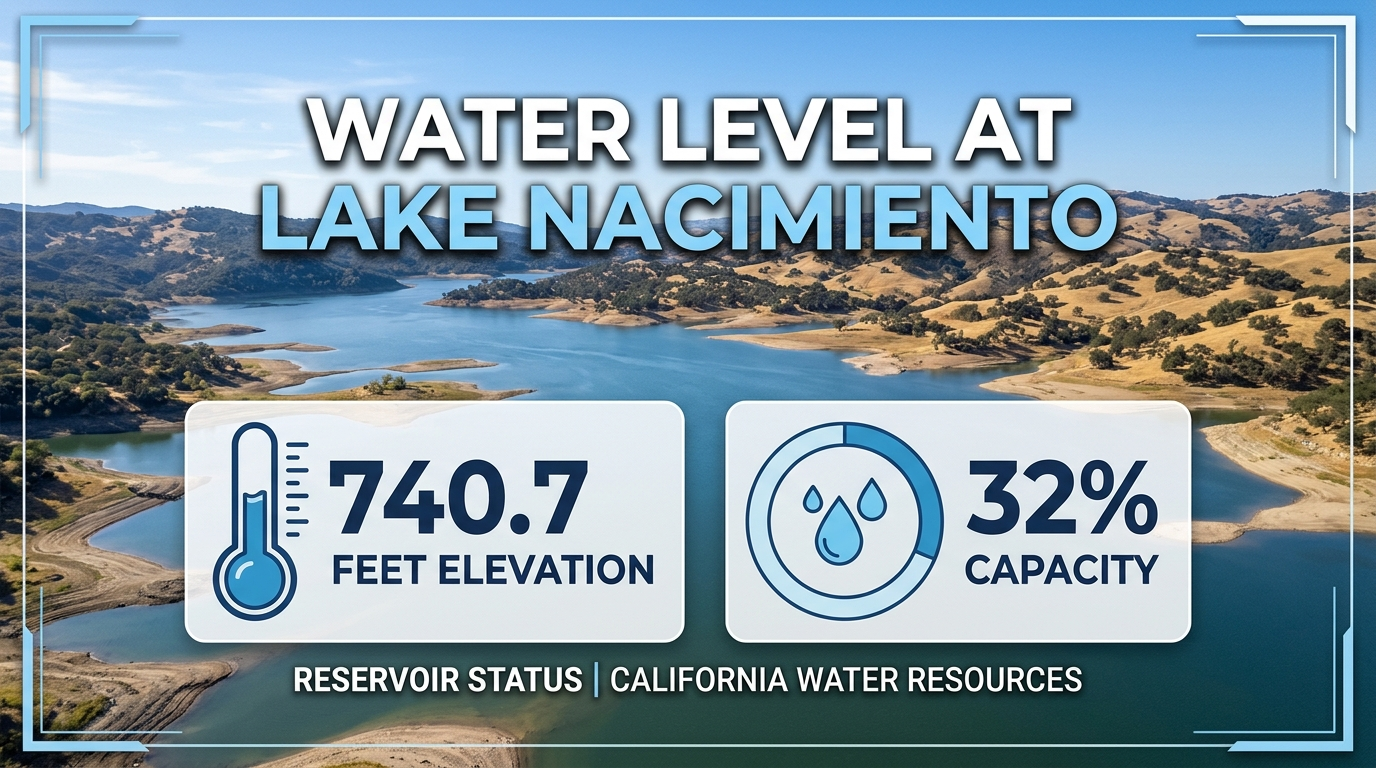
According to the latest available observation from the National Weather Service’s California-Nevada River Forecast Center, Lake Nacimiento recorded the following figures on November 16, 2026:
| Water Level Details | Latest Reading |
|---|---|
| Water surface elevation | 740.68 feet |
| Water stored | 121,475 acre-feet |
| Total capacity | 377,900 acre-feet |
| Percentage of capacity | Approximately 32% |
| Full-pool reference elevation | 800 feet |
These figures provide a useful picture of current reservoir conditions. At approximately 32% of its total capacity, the lake is considerably below its full-pool reference level.
It’s worth remembering that reservoir readings can change from one day to another. Anyone planning a boating trip should check the latest figures rather than relying on an older report.
Why Does the Water Level at Lake Nacimiento Change?
The lake doesn’t maintain the same elevation throughout the year. Its water supply depends on several natural and operational factors.
Here are the main reasons behind these changes:
- Rainfall: Winter storms bring water into the reservoir through the Nacimiento River and surrounding creeks.
- Summer weather: Hot temperatures increase evaporation, gradually reducing the amount of stored water.
- Water releases: Reservoir operators release water for downstream requirements and water management.
- Water demand: Agricultural, municipal, and regional water needs influence reservoir operations.
- Drought conditions: Extended periods of limited rainfall can affect the lake for multiple seasons.
And sometimes, a single winter storm can make a noticeable difference. That’s one reason the lake can look completely different from one visit to the next.
Water Level at Lake Nacimiento During Different Seasons
Seasonal patterns are important when understanding the lake. Although actual conditions vary each year, certain trends are fairly common.
| Season | Typical Water-Level Pattern | What Visitors May Experience |
|---|---|---|
| Winter | Often rises with rainfall | More water flowing into the lake |
| Spring | Frequently increases | Improved shoreline access |
| Summer | May gradually decline | Changing boat-launch conditions |
| Fall | Often lower than spring | Exposed shorelines and reduced water depth |
However, these are general patterns, not guaranteed predictions. A dry winter can produce lower spring levels, while substantial rainfall can quickly change the situation.
How the Water Level at Lake Nacimiento Affects Boating
Boating is one of the biggest attractions at Lake Nacimiento. But changing water elevations can influence where and how people launch their boats.
When the water is high, boat ramps and shoreline access are generally easier to use. Lower levels can create additional challenges.
Visitors should consider:
- Checking boat ramp availability before leaving home.
- Looking for updated information about launch conditions.
- Being cautious around shallow areas and exposed rocks.
- Allowing extra time when navigating unfamiliar sections.
- Following local boating and safety regulations.
According to the North County Water Resources Management Advisory Committee, recreational use can become more limited as the lake drops below certain elevations. Its guidance identifies approximately 780 feet as a desirable recreational level, while levels below 760 feet can make some ramps unusable and narrow certain boating areas.
Water Level at Lake Nacimiento and Fishing Conditions
Fishing conditions can also change as reservoir levels rise and fall.
When water levels fluctuate, fish may move between different areas depending on available cover, water temperature, and food sources.
Lake Nacimiento is particularly known for spotted bass fishing, although anglers also pursue other fish species.
A few practical suggestions for fishing trips include:
- Explore different depths when fish aren’t responding.
- Pay attention to submerged structures and rocky areas.
- Check seasonal fishing regulations.
- Monitor weather and water conditions before heading out.
- Avoid assuming that yesterday’s fishing location will produce the same results today.
But remember, water elevation is only one part of the fishing picture. Temperature, seasonal patterns, and fishing pressure matter too.
Where to Check the Water Level at Lake Nacimiento
Getting accurate information doesn’t have to be difficult. Several online resources provide useful reservoir updates and background information.
Some helpful options include:
- NOAA California-Nevada River Forecast Center: Provides reservoir elevation and storage observations.
- Monterey County Water Resources Agency: Offers official information about reservoir operations and water management.
- North County Water Resources Management Advisory Committee: Shares lake-level information and recreational guidance.
- San Luis Obispo County: Provides regional water project information and reservoir-related reports.
Checking these resources before your visit can help you avoid surprises.
Final Thoughts on the Water Level at Lake Nacimiento
The water level at Lake Nacimiento is more than just a number. It affects boating access, fishing opportunities, shoreline conditions, and the overall recreational experience.
The November 16, 2026 reading of 740.68 feet shows that the reservoir was holding approximately 32% of its total capacity at that time. Conditions can change, though, especially when winter rainfall begins arriving.
Whether you’re planning a weekend getaway, preparing for a fishing trip, or simply keeping an eye on California’s reservoirs, checking updated water-level information is always a smart idea.
A little preparation can make your next visit much more enjoyable.