
 By Abdullah Bajwa
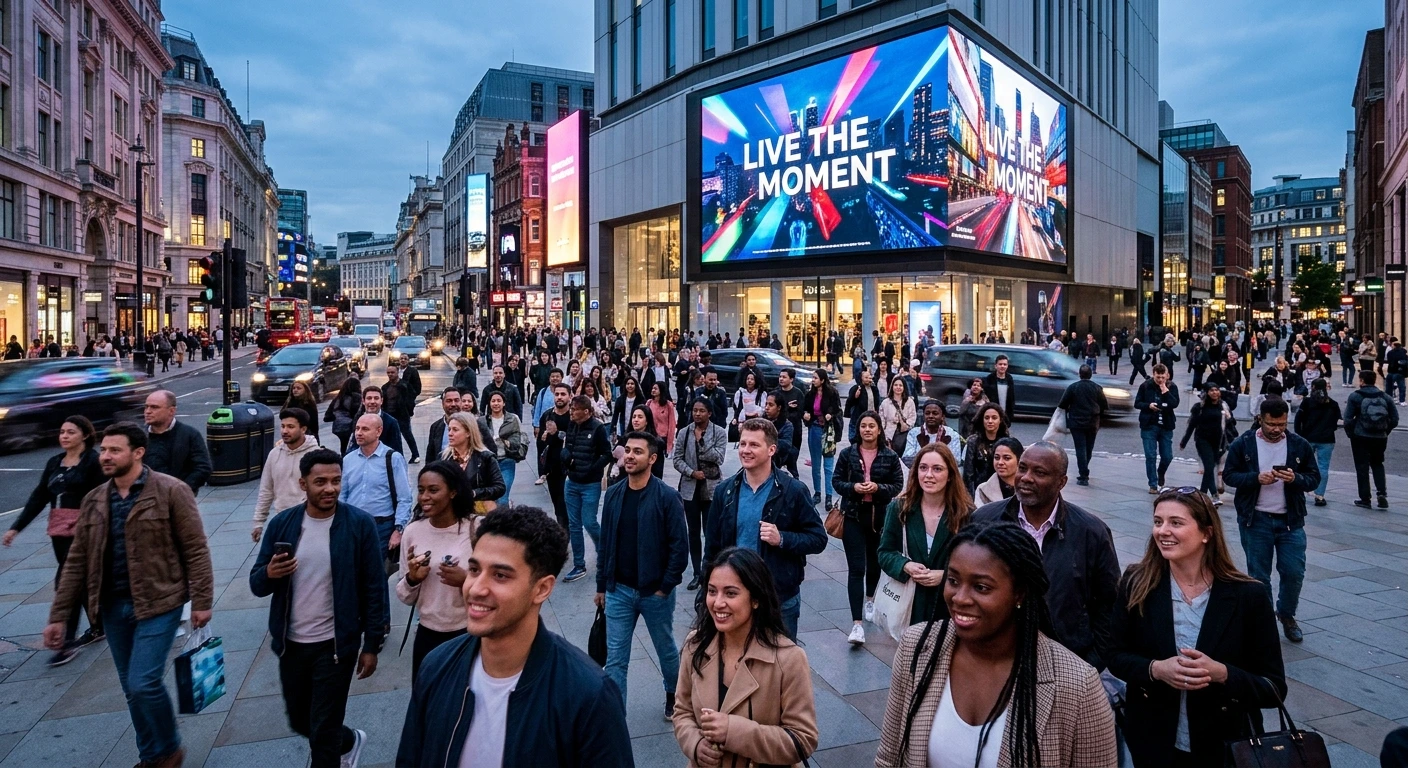
Digital advertising is everywhere these days. People see ads while scrolling through social media, watching videos, reading websites, and even checking their emails. But there’s another form of advertising that reaches people when they’re away from their screens at home. It’s called Digital Out-of-Home advertising, or DOOH.
The term dooh audience refers to the people who see or have an opportunity to see digital advertisements displayed in public places. These ads appear on digital billboards, shopping mall screens, transit displays, airport monitors, and other electronic signage.
And here’s what makes this advertising method interesting: brands don’t necessarily need to know someone’s name to reach the right audience. They can use location, movement patterns, demographics, and other audience insights to make their campaigns more relevant.
Let’s explore how it works and why businesses are paying attention to it.
What Is a DOOH Audience?
A DOOH audience is the group of people exposed to digital out-of-home advertising in physical environments. Unlike traditional online advertising, which targets people through websites and apps, DOOH connects with audiences in real-world locations.
For example, imagine a digital screen displaying a coffee advertisement inside a busy railway station. The people walking past that screen, waiting for trains, or spending time in the station represent its potential audience.
However, not everyone passing the screen will necessarily notice the advertisement. That’s an important distinction when measuring campaign performance.
How Does DOOH Audience Targeting Work?
Modern DOOH advertising uses different types of information to help brands decide where, when, and how to display their messages.
Some common targeting methods include:
- Location-based targeting: Advertisers select screens in places where their intended customers are likely to spend time.
- Demographic insights: Campaigns can be planned around estimated age groups, income profiles, and other population characteristics.
- Time-based targeting: Ads can change depending on the time of day or day of the week.
- Contextual targeting: Advertisements are selected according to local conditions, events, weather, or surrounding activities.
- Movement patterns: Aggregated mobility information can help estimate how people travel through different locations.
But targeting isn’t simply about putting an advertisement in front of as many people as possible. The real goal is to reach people who are more likely to find the message relevant.
Why Is the DOOH Audience Important for Advertisers?
Understanding the audience helps businesses spend their advertising budgets more carefully. A digital billboard in a shopping district may work well for a fashion brand, while a screen near a business center could be more suitable for professional services.
There are several reasons why audience insights matter:
- Better campaign planning: Brands can select locations based on their intended customers.
- Improved relevance: Advertisements can match the interests and habits of people in particular environments.
- More efficient spending: Businesses can avoid paying for placements that don’t support their campaign goals.
- Flexible advertising: Digital screens allow advertisers to update messages without replacing printed materials.
- Performance measurement: Campaign exposure and other available metrics help advertisers evaluate results.
And because digital screens can display different advertisements throughout the day, brands have more flexibility than they would with many traditional billboard placements.
How Is a DOOH Audience Measured?
Measuring a DOOH audience is a little different from measuring website visitors or social media impressions. Advertisers can’t simply count clicks because people usually interact with these advertisements by seeing them in public spaces.
Instead, measurement providers use different data sources and estimation methods to understand potential exposure.
According to the Interactive Advertising Bureau (IAB), modern DOOH measurement considers factors such as impressions, audience reach, dwell time, ad delivery, and attribution. Digital Out-Of-Home (DOOH) Measurement Guide+1
Here are some important metrics:
| Metric | What It Means |
|---|---|
| Impressions | Estimated number of advertising exposures |
| Reach | Number of unique people reached |
| Frequency | Average number of times people encounter an ad |
| Dwell time | Time people spend in an area or near a screen |
| Visibility | Likelihood that an advertisement can be seen |
| Engagement | Actions or responses associated with a campaign |
It’s worth remembering that an opportunity to see an advertisement doesn’t automatically mean someone actually looked at it.
Measurement companies may combine traffic information, mobile location data, sensors, demographic research, and statistical models to estimate exposure. The exact approach varies between providers and markets. IAB+1
Which Industries Benefit Most From a DOOH Audience?
Almost any business can benefit from digital outdoor advertising, but some industries naturally have more opportunities to connect with people in public spaces.
Consider these examples:
- Retail businesses: Shopping malls and commercial districts provide opportunities to promote clothing, electronics, beauty products, and special offers.
- Restaurants and food brands: Digital screens near offices, shopping areas, and transport locations can promote meals and nearby outlets.
- Travel companies: Airports, railway stations, and bus terminals provide access to people who are already travelling.
- Automotive brands: Roadside billboards and busy intersections offer valuable brand exposure.
- Entertainment companies: Cinemas, shopping centers, and event venues are useful places to promote upcoming releases and events.
- Financial services: Screens in commercial districts can help banks and financial brands increase awareness.
The important thing is choosing a location that makes sense for the product. A large audience isn’t always a valuable audience.
What Makes a DOOH Audience Different From an Online Audience?
Both advertising formats use data and targeting, but the way they reach people is quite different.
| Feature | DOOH Audience | Online Audience |
|---|---|---|
| Environment | Public physical locations | Websites and apps |
| Exposure | Shared screen exposure | Usually individual device exposure |
| Targeting | Location, context, and aggregated audience data | Interests, behavior, and digital signals |
| Interaction | Often passive | Clicks, views, and other actions |
| Measurement | Estimated physical exposure | Digital tracking and analytics |
| Creative format | Digital billboards and public screens | Banners, videos, and social ads |
One interesting difference is that a single DOOH advertisement can reach multiple people at the same time. A digital advertisement on a website generally records exposure at the individual device or user level.
This makes audience measurement particularly important in outdoor advertising. Broadsign+2
How Programmatic Advertising Improves DOOH Audience Targeting
Programmatic DOOH, commonly called pDOOH, has made digital outdoor advertising more flexible.
Traditionally, advertisers often booked specific screens for a fixed period. Programmatic technology allows them to establish campaign conditions and purchase suitable advertising opportunities automatically.
For example, a beverage company might want to show advertisements during hot weather. Instead of displaying the same message throughout the day, it can use contextual conditions to activate relevant creative when temperatures rise.
Other possibilities include:
- Displaying breakfast advertisements during morning commuting hours.
- Promoting retail offers near shopping districts.
- Changing messages during local sporting events.
- Adjusting campaigns according to traffic or weather conditions.
- Selecting advertising opportunities using aggregated audience signals.
This approach makes campaigns more responsive to real-world situations. Broadsign+1
How Businesses Can Reach the Right dooh audience
Getting the most out of a DOOH campaign requires more than choosing a popular billboard. Businesses should understand their customers and think about where those customers spend their time.
A few practical steps can make campaign planning easier:
- Define the target market: Identify the type of people most likely to purchase your product or service.
- Choose suitable locations: Look for screens in areas that attract your intended audience.
- Study traffic patterns: Understand which hours and days generate the most relevant exposure.
- Create engaging advertisements: Use clear messages, attractive visuals, and readable text.
- Review campaign reports: Compare estimated impressions, reach, frequency, and other available performance indicators.
Common Mistakes When Targeting a dooh audience
Even a well-funded advertising campaign can struggle if the planning isn’t right.
Some mistakes worth avoiding include:
- Choosing locations based only on foot traffic.
- Ignoring the difference between potential exposure and actual attention.
- Showing advertisements that aren’t relevant to the surrounding environment.
- Using complicated messages that people cannot understand quickly.
- Focusing entirely on impressions instead of overall campaign results.
Privacy also deserves attention. Audience insights should be collected and used responsibly, with appropriate privacy safeguards and transparency.
What Is the Future of the dooh audience?
The future of DOOH advertising looks increasingly connected to automation, artificial intelligence, and data-driven campaign planning.
Advertisers are becoming more interested in understanding not just how many people pass a screen, but also when an advertisement is most relevant and which locations offer better opportunities.
Programmatic buying, dynamic creative, and improved measurement standards are likely to remain important parts of this development. The IAB’s 2025 measurement guide also highlights the industry’s growing focus on consistent reporting and more reliable campaign evaluation. Digital Out-Of-Home (DOOH) Measurement Guide+1
Final Thoughts on the dooh audience
The dooh audience represents an important part of modern advertising because it connects brands with people in their everyday environments. From shopping centers and airports to busy streets and public transport stations, digital screens offer businesses opportunities to reach potential customers outside the online world.
But successful campaigns aren’t simply about reaching more people. Location selection, audience relevance, creative quality, and accurate measurement all matter.
As advertising technology continues to improve, understanding the dooh audience will become even more valuable for businesses looking to build awareness and connect with customers in meaningful ways.