
 By Abdullah Bajwa
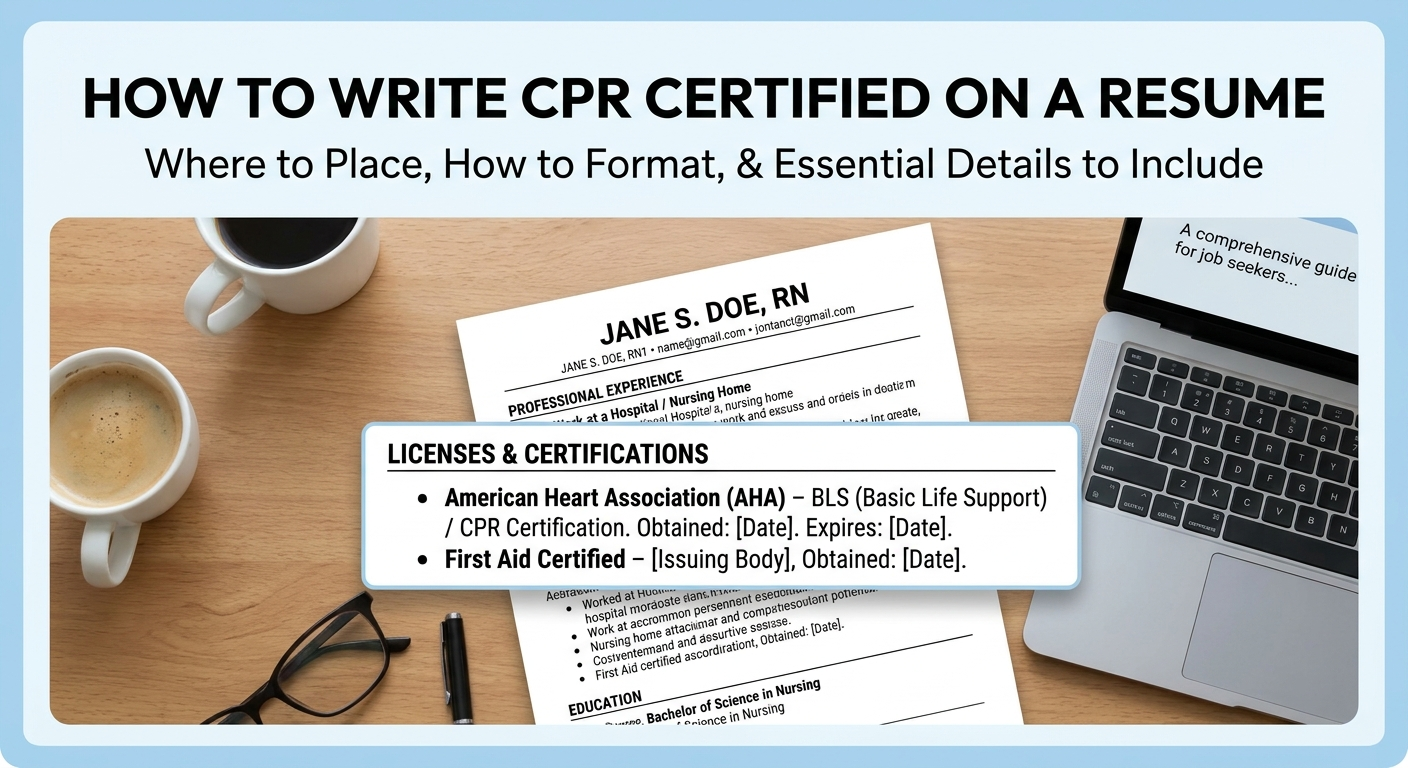
Adding CPR certification to your resume might seem like a small detail, but it can make a meaningful difference when applying for jobs. Employers often look for candidates who have practical safety knowledge, especially in healthcare, education, childcare, fitness, hospitality, and other people-focused industries.
But simply writing “CPR certified” isn’t always the best approach. You want employers to understand what training you’ve completed, which organization issued your credential, and whether it’s still valid.
If you’re wondering how to write cpr certified on a resume, this guide explains the right format, where to place it, and how to make it look professional without taking up too much space.
1. How to Write CPR Certified on a Resume in the Right Format
The easiest way to list CPR certification is through a dedicated Certifications section. Include the official certification name, issuing organization, and completion or expiration date.
For example:
Certifications
- CPR and AED Certification – American Red Cross, March 2026
- Basic Life Support (BLS) – American Heart Association, January 2026
Make sure the organization and course title match your actual certificate. Different training providers offer different CPR programs, so don’t use a credential name you haven’t earned.
A clear entry gives recruiters enough information to understand and verify your qualification.
2. How to Write CPR Certified on a Resume in the Certifications Section
A dedicated section is usually the most straightforward option. It makes your qualification easy to find, particularly when an employer specifically requests CPR training.
You can use headings such as:
- Certifications
- Licenses and Certifications
- Professional Training
- Healthcare Certifications
Here’s a simple formatting table to help you organize the information.
| Information | What to Include |
|---|---|
| Certification name | CPR, AED, or BLS |
| Issuing organization | Red Cross, AHA, or actual provider |
| Completion date | Month and year |
| Expiration date | If applicable |
| Additional details | Relevant emergency response training |
And remember, accuracy matters more than fancy formatting. Your resume should reflect the actual credential you hold.
3. How to Write CPR Certified on a Resume for Different Jobs
Not every profession requires the same type of CPR qualification. The way you highlight it can depend on the position you’re applying for.
For example:
Healthcare Jobs
If you’re applying for a hospital, clinic, or patient-care position, list your exact CPR or Basic Life Support credential prominently.
Example:
- Basic Life Support (BLS) Provider – American Heart Association, Issued January 2026, Expires January 2028.
Teaching and Childcare Jobs
Schools and childcare centers often value emergency preparedness.
Example:
- Pediatric First Aid and CPR Certification – [Issuing Organization], [Month Year].
Fitness and Sports Jobs
Personal trainers, coaches, and gym employees may benefit from highlighting CPR and AED training.
Example:
- CPR/AED Certification – [Issuing Organization], [Month Year].
The important thing is to use the official course title rather than assuming every CPR course covers the same subjects.
4. How to Write CPR Certified on a Resume in Your Professional Summary
Sometimes, placing your certification in the summary makes more sense, especially when the job description specifically asks for it.
For example:
“Dedicated childcare professional with two years of experience supporting children’s development. CPR and First Aid certified, with a strong understanding of workplace safety and emergency preparedness.”
Another example for a healthcare applicant:
“Compassionate healthcare assistant with experience supporting patients and maintaining safe care environments. Holds current Basic Life Support (BLS) certification.”
This approach helps employers notice an important qualification quickly.
5. How to Write CPR Certified on a Resume Without Making Mistakes
A few common mistakes can make an otherwise good resume look less professional.
Avoid these problems:
- Listing expired credentials: Don’t present an expired certification as current.
- Using incorrect titles: Write the official course name shown on your certificate.
- Leaving out the provider: Employers should know which organization issued your credential.
- Adding unnecessary details: A resume doesn’t need a complete description of your training course.
- Claiming certification before completion: If you’re still taking the course, clearly label it as “In Progress.”
- Listing training you never completed: Only include qualifications you can genuinely support.
Also, check the renewal requirements of your issuing organization. Certification validity can vary depending on the course and provider.
6. How to Write CPR Certified on a Resume If Your Training Is in Progress
What if you’ve enrolled in CPR training but haven’t received your certificate yet?
You can still mention it, provided you clearly explain its status.
For example:
Certifications and Training
- CPR and AED Training (In Progress) – [Training Organization]
- Expected Completion: December 2026
Don’t write “CPR Certified” until you’ve successfully completed the required training and received the credential.
Being honest about your progress is always better than creating confusion during an interview.
Final Thoughts
Knowing how to write cpr certified on a resume can help you present an important qualification in a clear and professional way. Keep the entry simple, mention the official certification title, identify the issuing organization, and include relevant dates.
Whether you’re applying for a healthcare position, teaching job, childcare role, or fitness opportunity, a properly listed CPR credential can demonstrate your commitment to safety and emergency preparedness.
One small resume detail, presented correctly, can help an employer see that you’re prepared to take responsibility when it matters.