
 By Abdullah Bajwa
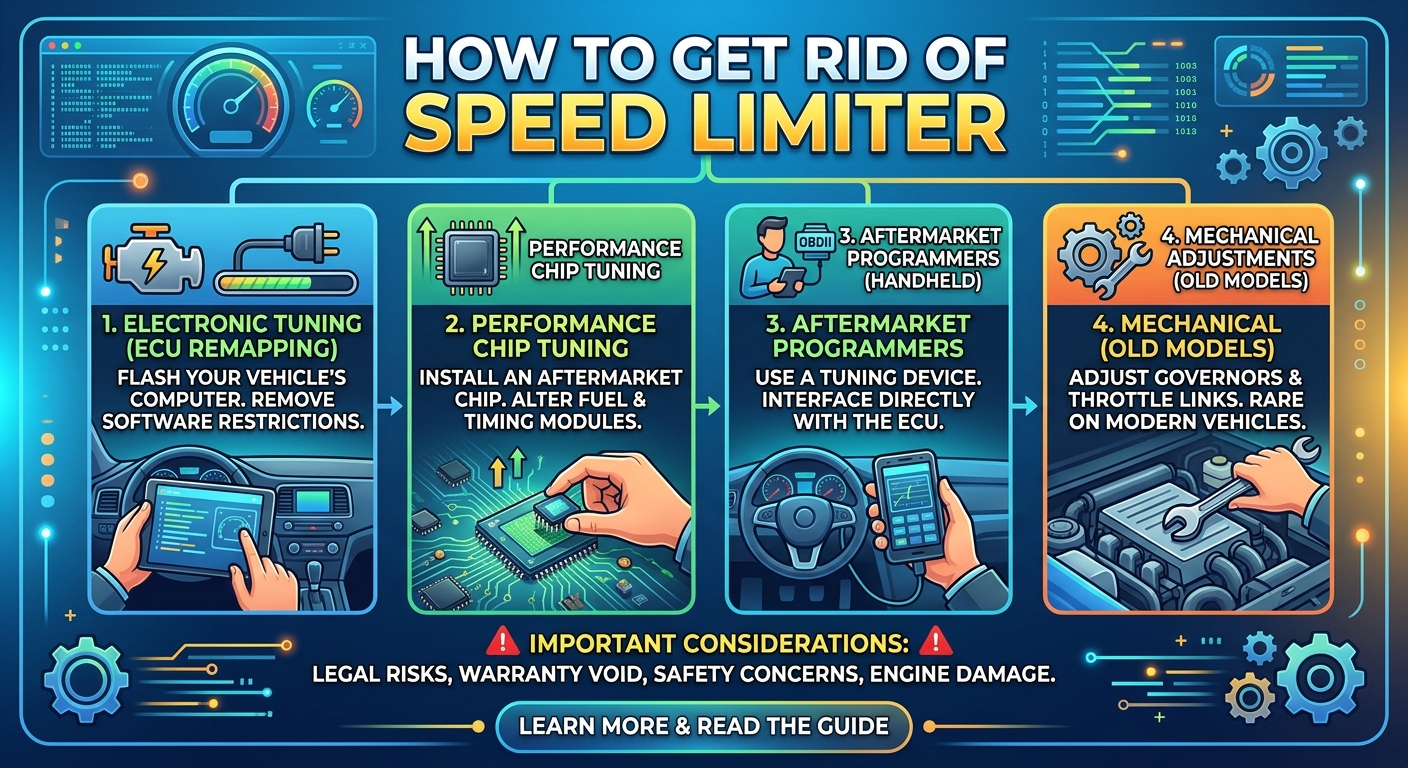
Have you ever been driving on a highway, pressed the accelerator, and noticed that your car simply won’t go any faster? It’s frustrating, especially when the road ahead is clear and your vehicle seems to have plenty of power left.
A speed limiter could be the reason.
Modern cars, pickup trucks, SUVs, and commercial vehicles use different systems to control maximum speed. Some restrictions come directly from the manufacturer, while others are configured for fleet operations or specific driving conditions.
If you’re researching how to get rid of speed limiter restrictions, there’s something important to understand first: not every speed restriction can or should be removed. The right solution depends on your vehicle, its software, and applicable US regulations.
What Is a Speed Limiter in American Vehicles?
A speed limiter is a system that prevents a vehicle from exceeding a programmed maximum speed. Most modern vehicles use electronic controls to manage this function.
The Engine Control Unit (ECU) monitors information from different vehicle sensors. When the vehicle approaches its programmed speed threshold, the system can reduce engine output to prevent further acceleration.
For example, a pickup truck might reach 100 mph but struggle to accelerate beyond that point, even when the driver presses the accelerator fully.
Manufacturers use speed limiters for several reasons:
- Improving highway safety.
- Protecting engine and drivetrain components.
- Managing vehicle performance.
- Supporting fleet safety policies.
- Meeting applicable regulatory requirements.
And sometimes, the restriction is simply part of the vehicle’s original factory configuration.
How to Get Rid of Speed Limiter: Identify the Type First
Before looking at how to get rid of speed limiter restrictions, determine which type is installed in your vehicle.
Different systems require different diagnostic approaches.
| Speed limiter type | Common application |
|---|---|
| Factory speed limiter | Passenger cars and SUVs |
| ECU-based limiter | Modern cars and pickup trucks |
| Fleet speed limiter | Company-owned vehicles |
| GPS-based restriction | Certain fleet management systems |
| Mechanical governor | Older vehicles and specialized equipment |
For example, a company-owned delivery truck may have a fleet-configured speed restriction, while a passenger car may have a manufacturer-programmed maximum speed.
The distinction matters because the solution isn’t necessarily the same.
How to Get Rid of Speed Limiter Through Professional ECU Diagnosis
For electronically controlled vehicles, professional diagnosis is a sensible starting point.
A qualified automotive technician can inspect the ECU configuration and determine whether the vehicle has a programmed speed restriction or an unrelated mechanical problem.
1. Check Your Owner’s Manual
Start with your vehicle’s owner’s manual.
Manufacturers sometimes explain speed warnings, driver-assistance features, and adjustable vehicle settings. However, remember that a speed warning and an actual speed limiter aren’t the same thing.
One alerts you when you reach a selected speed. The other actively restricts acceleration.
2. Perform an ECU Diagnostic Scan
A professional diagnostic scan can help identify problems affecting vehicle speed and engine performance.
Ask the technician to inspect:
- Vehicle speed sensor readings.
- ECU fault codes.
- Engine performance data.
- Transmission-related faults.
- Factory software calibration.
If your car suddenly starts limiting acceleration, a diagnostic scan can help identify the underlying issue.
3. Contact an Authorized Dealership
If the restriction comes from factory software, contact an authorized dealer.
They can explain whether the setting is adjustable and whether an approved software configuration is available for your specific model.
Avoid experimenting with unknown ECU files or aftermarket bypass devices. A modification that appears simple can affect several connected vehicle systems.
How to Get Rid of Speed Limiter: US Legal Considerations
US drivers should understand the difference between federal regulations, state laws, and private fleet policies.
An important development occurred on July 24, 2025: the Federal Motor Carrier Safety Administration (FMCSA) and National Highway Traffic Safety Administration (NHTSA) withdrew their previously proposed federal speed-limiter requirements for certain heavy commercial vehicles. US Department of Transportation+1
This means the proposed nationwide heavy-truck mandate was withdrawn. However, it does not mean every speed-limiter modification is automatically legal.
Drivers and vehicle owners should still consider:
- Applicable state and local traffic laws.
- Commercial vehicle operating requirements.
- Employer and fleet policies.
- Manufacturer safety specifications.
- Insurance and warranty conditions.
If you operate a commercial truck, check with your fleet manager or a qualified transportation compliance professional before changing its speed settings.
How to Get Rid of Speed Limiter: Mistakes to Avoid
Searching online for how to get rid of speed limiter restrictions can lead you to several quick-fix suggestions. Some involve ECU remapping, electronic bypass devices, or changing sensor settings.
But these shortcuts aren’t always reliable.
Here are a few things you should avoid:
- Unknown ECU software: Unverified software can damage vehicle electronics or create unexpected engine behavior.
- Speed sensor tampering: Incorrect sensor readings can affect other vehicle systems.
- Cheap bypass devices: Poor-quality devices may interfere with factory electronics.
- Incorrect tire calibration: Changing tire sizes without proper calibration can affect speedometer accuracy.
- Unapproved modifications: Certain changes can create legal, warranty, or insurance complications.
A professional inspection is usually a better investment than experimenting with inexpensive modifications.
Can a Speed Limiter Affect Vehicle Performance?
Yes. A speed limiter directly affects how a vehicle responds when approaching its programmed maximum speed.
However, not every acceleration problem is caused by a limiter.
For instance, a dirty air filter, faulty fuel system, transmission issue, or engine sensor problem can also reduce performance.
Consider these possibilities:
| Vehicle problem | Possible symptoms | Recommended action |
|---|---|---|
| Factory speed restriction | Acceleration stops at a consistent speed | Check manufacturer specifications |
| Faulty speed sensor | Incorrect speed readings | Professional sensor inspection |
| Engine performance issue | Weak acceleration | Engine diagnostic scan |
| Transmission problem | Poor acceleration or shifting | Transmission inspection |
| Incorrect tire calibration | Inaccurate speedometer readings | Verify tire specifications |
And don’t overlook routine maintenance. Sometimes the problem has nothing to do with the speed limiter itself.
How to Get Rid of Speed Limiter: Safer Alternatives for US Drivers
If your vehicle isn’t reaching its expected performance, consider these alternatives before requesting any modification:
- Have the engine and transmission inspected.
- Check tire pressure and manufacturer-approved tire sizes.
- Ask a dealership about available software updates.
- Inspect vehicle sensors for faults.
- Review factory performance specifications.
- Check whether a fleet administrator configured the restriction.
These steps can help restore normal vehicle performance without compromising important safety features.
Final Thoughts on How to Get Rid of Speed Limiter
Understanding how to get rid of speed limiter restrictions starts with identifying why your vehicle has one. A factory-installed restriction, a fleet setting, and a mechanical problem are three different situations.
For US drivers, it’s also important to understand that the withdrawal of the proposed federal heavy-truck speed-limiter mandate in 2025 doesn’t remove other applicable vehicle regulations.
Instead of trying random ECU modifications or bypass devices, get your vehicle checked by a qualified automotive professional.
Your vehicle should perform as designed, but safety, reliability, and legal compliance should always come first.
Research Sources
These sources provide useful background and regulatory information for the article:
- US Department of Transportation – Speed Limiting Devices Withdrawal
- FMCSA – Speed Limiters Notice of Intent
- FMCSA – Speed Limiting Devices Regulatory Docket
- Reginfo.gov – Heavy Vehicle Speed Limiters