 By Abdullah Bajwa
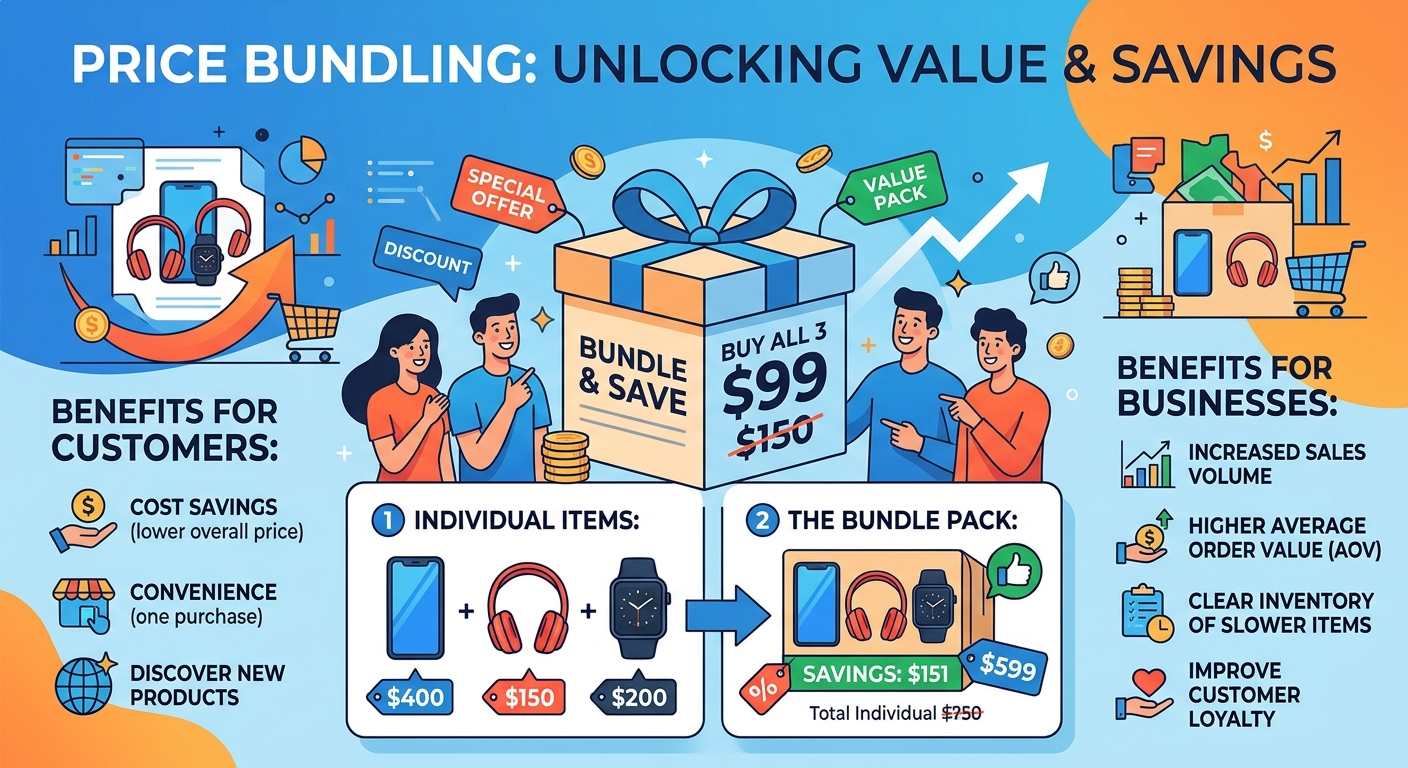
Businesses are always looking for ways to attract customers while increasing sales. One strategy that has become popular across different industries is price bundling. You’ve probably seen it without even realizing it. A fast-food restaurant offers a burger, fries, and a drink for one price. A software company combines several tools into a single subscription. Even online stores offer product packages at discounted rates.
That’s price bundling in action.
The idea is simple: instead of selling several products or services separately, a business combines them into one package and offers a single price. It can make shopping easier for customers and help businesses sell more products. But there’s a little more to it than simply putting items together and reducing the total cost.
Let’s explore how this pricing strategy works and why so many businesses use it.
What Is Price Bundling?
Price bundling is a pricing strategy in which a company combines two or more products or services and sells them together for one combined price. Usually, the package costs less than purchasing each item individually.
For example, imagine a clothing store selling a shirt for $25 and trousers for $40. Buying both separately would cost $65. The store could offer a combined outfit package for $55.
The customer saves $10, while the business gets a sale involving two products instead of just one.
And that’s the main attraction of price bundling. Customers feel they’re getting better value, while businesses have an opportunity to increase their average order value.
How Does Price Bundling Work?
The process usually starts with identifying products that customers naturally purchase together. A business then calculates the individual prices, decides on a combined price, and presents the package as a convenient option.
Here’s a simple example:
| Products | Individual price |
|---|---|
| Shampoo | $12 |
| Conditioner | $10 |
| Hair mask | $15 |
| Total | $37 |
| Bundle price | $30 |
In this situation, customers save $7 by purchasing the complete package.
However, the business needs to calculate its costs before setting the final price. A discount that attracts customers but leaves almost no profit isn’t necessarily a good deal for the seller.
Different Types of Price Bundling
Not every business uses the same bundling method. The right approach depends on the products, customer expectations, and overall business goals.
Here are four common types of price bundling:
1. Pure Price Bundling
Pure price bundling happens when products are available only as a combined package rather than as separate purchasing options.
For example, a company might offer a particular software package containing several connected tools that customers can only access through one subscription.
This approach works when products are designed to complement one another.
2. Mixed Price Bundling
Mixed price bundling gives customers two choices. They can purchase products separately or buy the complete package at a combined price.
Think about a restaurant offering a burger, fries, and a drink as a meal deal. Customers can still order each item individually if they prefer.
It’s a flexible approach because customers don’t feel forced into purchasing the entire package.
3. Product-Based Bundling
This method combines products that serve related purposes or work well together.
Some examples include:
- A laptop with a mouse and laptop bag.
- A skincare kit containing cleanser, toner, and moisturizer.
- A camera package with a tripod and memory card.
- A fitness package with workout equipment and accessories.
The idea is to make shopping easier by offering useful combinations.
4. Premium Price Bundling
Not every bundle needs to be cheaper. Some businesses create premium packages that include additional services, exclusive features, or convenience.
For instance, a hotel might combine accommodation, breakfast, airport transportation, and access to premium facilities.
Customers pay for the complete experience rather than simply looking for a discount.
Major Benefits of Price Bundling for Businesses
Why do companies continue using this strategy? Because a well-planned package can improve several areas of business performance.
Some important benefits include:
- Higher average order value: Customers may spend more when several useful products are presented together.
- Better product visibility: Less popular products can gain attention when included with popular items.
- Improved customer experience: Buyers can find related products without searching for each one separately.
- Inventory management: Bundles can help businesses move excess or slow-selling stock.
- Customer satisfaction: Attractive packages can make customers feel they’re receiving better overall value.
Shopify’s pricing guide also highlights increased order value, improved inventory management, and product discovery as important advantages of bundling. Shopify+1
Possible Disadvantages of Price Bundling
Despite its advantages, price bundling isn’t perfect. Businesses can make mistakes when they focus too much on selling packages and forget what customers actually want.
For example, combining unrelated products just to clear inventory might not attract buyers. People generally prefer packages that solve a problem or offer something genuinely useful.
Other potential disadvantages include:
- Lower profit margins: Offering discounts can reduce earnings on individual products.
- Limited customer choice: Some buyers may not need every item included in a package.
- Product cannibalization: Customers who would have purchased individual products at full price may switch to discounted bundles.
- Pricing difficulties: Finding a price that appeals to customers while protecting profitability can be challenging.
The best solution is to understand customer preferences and avoid adding unnecessary products just to make a package look bigger. HubSpot Blog+1
How to Create an Effective Price Bundling Strategy
Creating a successful package requires more than selecting a few products and adding a discount. Businesses should understand what customers value before making their offers.
Here are some practical steps:
- Study customer buying habits: Identify which products customers frequently purchase together.
- Choose complementary products: Select items that naturally fit together and provide genuine value.
- Calculate your costs: Consider production, packaging, shipping, and other expenses before deciding on a bundle price.
- Offer attractive savings: Make the package appealing without sacrificing too much profit.
- Test different combinations: Experiment with different products and prices to discover what customers prefer.
- Monitor performance: Track sales, customer feedback, and profit margins to measure results.
Harvard Business Review’s research on bundled pricing also emphasizes that businesses shouldn’t treat bundling as simply a discounting technique. Convenience, customer experience, and the overall value of a package matter too. Harvard Business Review+1
Real-World Examples of Price Bundling
Price bundling is used across many industries. You don’t have to look far to find examples.
| Industry | Bundled offer | Main purpose |
|---|---|---|
| Fast food | Burger, fries, and drink | Encourage larger orders |
| Technology | Laptop with accessories | Increase product value |
| Beauty | Skincare product sets | Promote multiple products |
| Software | Multiple tools in one subscription | Offer convenience |
| Travel | Flight, hotel, and transport | Simplify trip planning |
These examples show that price bundling isn’t limited to retail stores. Service providers, restaurants, technology companies, and travel businesses can all use it.
Is Price Bundling Right for Every Business?
Not necessarily. Some products are better sold individually, especially when customers have very different preferences or don’t need additional items.
But businesses selling complementary products often have a good opportunity to experiment with this approach.
A small online store, for example, could start by combining three popular products into one package. There’s no need to introduce ten different bundles immediately. Start small, observe customer reactions, and make adjustments based on actual sales.
Conclusion
Price bundling is a practical pricing strategy that can benefit both businesses and customers when implemented correctly. It encourages larger purchases, improves product discovery, and makes shopping more convenient.
The key is choosing the right products and setting a sensible combined price. A good bundle shouldn’t simply contain more items; it should offer something customers genuinely want.
Whether you’re running an online store, restaurant, or service-based company, experimenting with price bundling could be a useful way to improve your sales strategy.
Research sources:
- Shopify – Price Bundling: How It Helps Increase Sales
- HubSpot – Price Bundling Strategy Explained
- Harvard Business Review – It’s Time to Try Bundled Pricing